Sarah Hawley (BEd '18) is making an impact in classrooms in northern Ontario, supporting Indigenous youth navigating educational paths towards a brighter future.
 In her classroom in North Caribou Lake First Nation, Sarah Hawley (BEd ’18) works to ensure every student knows that they matter and deserve an education.
It’s a message the recent Brock University graduate is dedicated to reinforcing daily while building connections with students in the remote northwestern Ontario community.
“I have always loved working with kids, especially one-on-one. They know I honour their unique voices, and I help them realize they are worthy as a person and more than capable of learning,” she said.
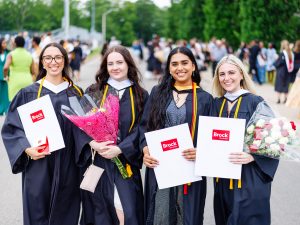
Hawley crossed Brock’s Convocation stage on Thursday, June 12 as one of many Indigenous graduates who, due to a recent adjustment in policy, conferred a Bachelor of Education in Indigenous Adult Education.

Many of Brock’s Indigenous Educational Studies graduates gathered during Brock’s 117th Convocation on Thursday, June 12.
Sherri Vansickle, Assistant Professor of Indigenous Educational Studies, said the University’s support — across all departments and services— for Brock’s Indigenous graduates on their educational journey demonstrates reconciliation in action.
“In the Faculty of Education, we are so lucky to have the allyship and support of Dean Mary-Louise Vanderlee who continues to advance truth and reconciliation for our students,” she said. “Our Indigenous graduates are the next generation of teachers who will guide others on the positive path forward.”
Inspiring Indigenous youth motivated Hawley to embark on her teacher education journey with Brock, especially as a mother of teens who saw her own children struggle at times with the transition into high school.
“I wanted to show my children the value of education and staying in school to move forward in their lives,” she said. “You need education to make a difference and make changes in this world.”
Hawley’s time in Indigenous Educational Studies in the Faculty of Education (FOE) was impactful. She was encouraged by the program acknowledging Indigenous learning preferences with culturally specific support.
“The professors understood our Indigenous ways of learning and knowing and made course material very relatable,” she said.
Gaining skills in lesson delivery that would resonate with her students was a key takeaway from her studies.
“There are many types of classrooms, and every child learns differently,” she said. “Our Brock professors helped us understand this and taught us how to meet young learners where they are.”
Hawley tailors her classes to the unique needs of her students. She continues to lead a transition program specifically for students with exceptionalities and those who face personal challenges.
Hawley often works with students who have dropped out of school or did not attend enough classes to progress, noting there are a myriad of reasons why students may end up in a disadvantaged situation.
“Up north, there are so many factors affecting our youth. It’s complex, and many struggle with anxiety, mental health, grief and trauma, just to name a few,” she said.
With lived familial experience involving learning delays and autism, Hawley brings deep insight and emotional understanding to her students.
“I try to instil hope in them: hope to try, hope to finish the school year and even hope to live. I want them to see themselves how I see them.”
In Hawley’s classroom, everyone is respected for who they are.
“Brock has helped me continue to make safes space for Indigenous youth in education, planting seeds of hope in the young people I work with.”