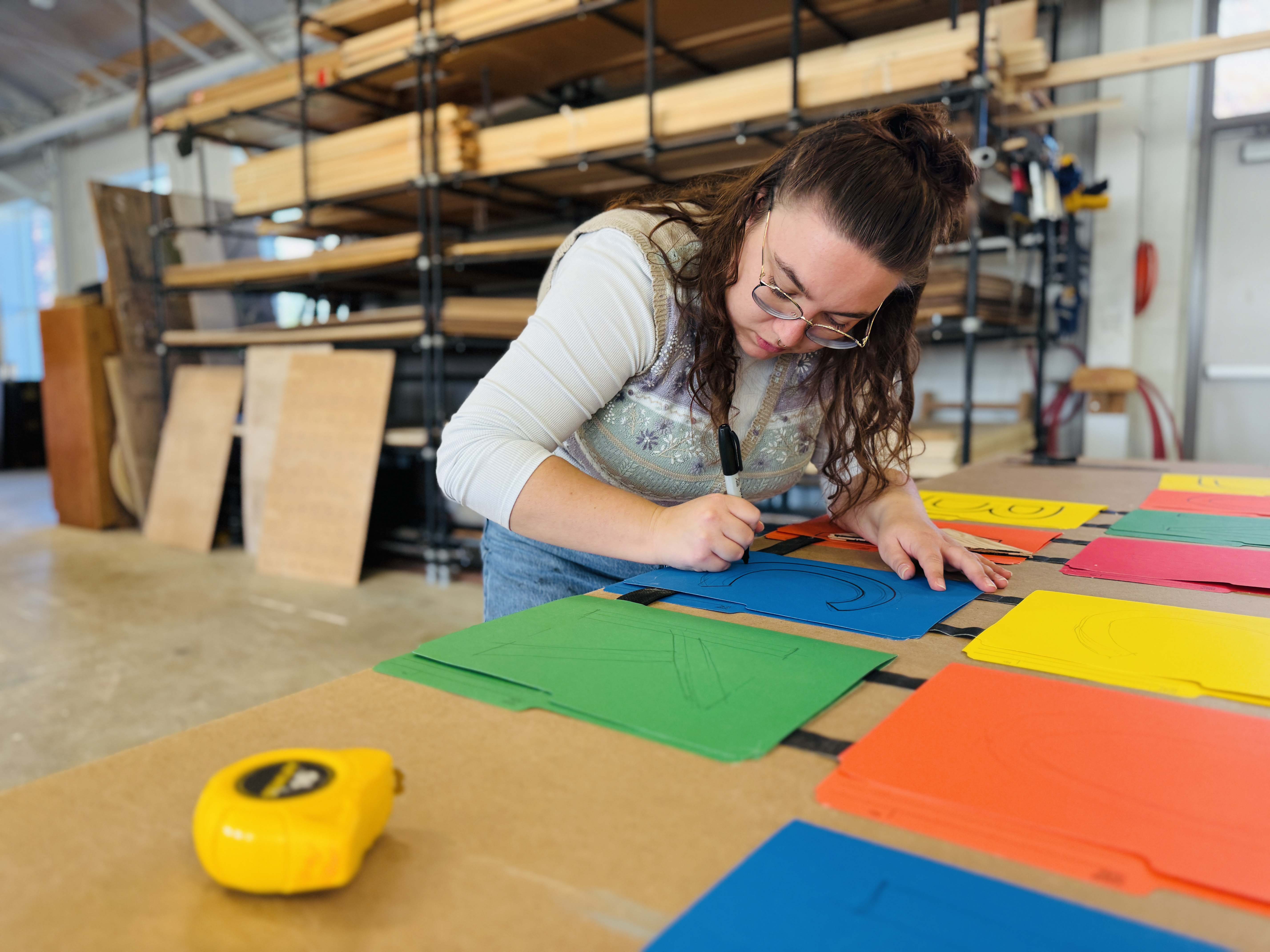
 Assistant Professor Natalie Spadafora (BA/BEd ’13, MA ’15, PhD ’21) was recently recognized by the Alberti Center for Bullying Abuse Prevention at the University at Buffalo for her early career research into incivility and bullying intervention.
Natalie Spadafora (BA/BEd ’13, MA ’15, PhD ’21) says she only became an award-winning researcher because she wanted to “keep the door open” to potential graduate study.
When the Assistant Professor of Child and Youth Studies signed up to complete an honours thesis with Professor Zopito Marini, she was still counting on a career as a classroom teacher.
But Spadafora’s penchant for research led first to a master’s degree, then a PhD, and then postdoctoral fellowships. And thanks to a spike in media interest, her findings on incivility and how it predicts future bullying behaviour has now reached families and educators nationwide, helping parents and educators understand how addressing low-level behaviours in early childhood can pay dividends in reducing bullying behaviour in later years.
“Incivility, especially in early childhood, can seem like something we don’t need to act on, but the alternative is waiting until it becomes higher level, antisocial bullying behaviour,” she says. “Intervening with bullying is way harder, and doesn’t necessarily work — the data on adolescent bullying interventions is pretty mixed.”
Spadafora’s research on incivility, together with her work related to peers defending others being victimized and teacher interventions in bullying situations, was recently honoured with an Early Career Award from the University at Buffalo’s Alberti Center for Bullying Abuse Prevention.
Spadafora continues to study the development of uncivil behaviour in children and adolescents in relation to other antisocial behaviour through an Insight Development Grant from the Social Sciences and Humanities Research Council (SSHRC), which is funded by the Government of Canada.
She is also a collaborator on a SSHRC Insight Development Grant with Laura Lambe of St. Francis Xavier University examining the use of virtual reality and qualitative methods to better understand peer defending by adolescents.
Through these studies, Spadafora builds on her existing body of work about peer defending, including her frequently cited study on what motivates teens to intervene or stay silent when they witness bullying and the cost/benefit analysis they engage in to come to their decision.
Spadafora and Lambe’s recent study, currently under review, focused on how when and how young people determine whether their bullying intervention was successful, findings the research team plans to share with teachers and students in the coming year.
“I’m really interested in the reasons why people choose to defend or not to defend,” she says. “We also want to understand how adolescents conceptualize effective defending because it doesn’t seem to always be the same as the way researchers and teachers do.”
Spadafora also wants to understand when and why teachers intervene in different types of aggressive situations. Her most recent publication in the Journal of School Violence, “Examining Factors that Influence Preservice and In-Service Teachers’ Intention to Intervene in Cissexist and Heterosexist Victimization,” looks at how school culture and previous educator experience may shape responses from teachers when transgendered students are being harassed by classmates.
As part of BRAVE: Brock Research on Aggression and Victimization Experiences, Spadafora says she is eager to engage with longitudinal data collected at schools in Niagara to tackle research questions spanning child development years. She also has plans for research into cross-cultural questions about incivility and bullying.
“The other piece I’m really interested in, a little further down the road, is looking at incivility and bullying cross-culturally, knowing that different cultures have different expectations when it comes to authority or educational systems,” she says. “How people perceive and measure incivility differently is something we don’t have explicit data for yet.”
As her research career ramps up, Spadafora is excited to look ahead to the next phase of her professional journey.
“Now I’m in a position where I have the opportunity to start a lab and be a supervisor and a mentor,” she says. “For me, working with mentors was such a big piece — probably the biggest piece — of my personal journey. Nothing else inspired me as much as the people I got to work with.”