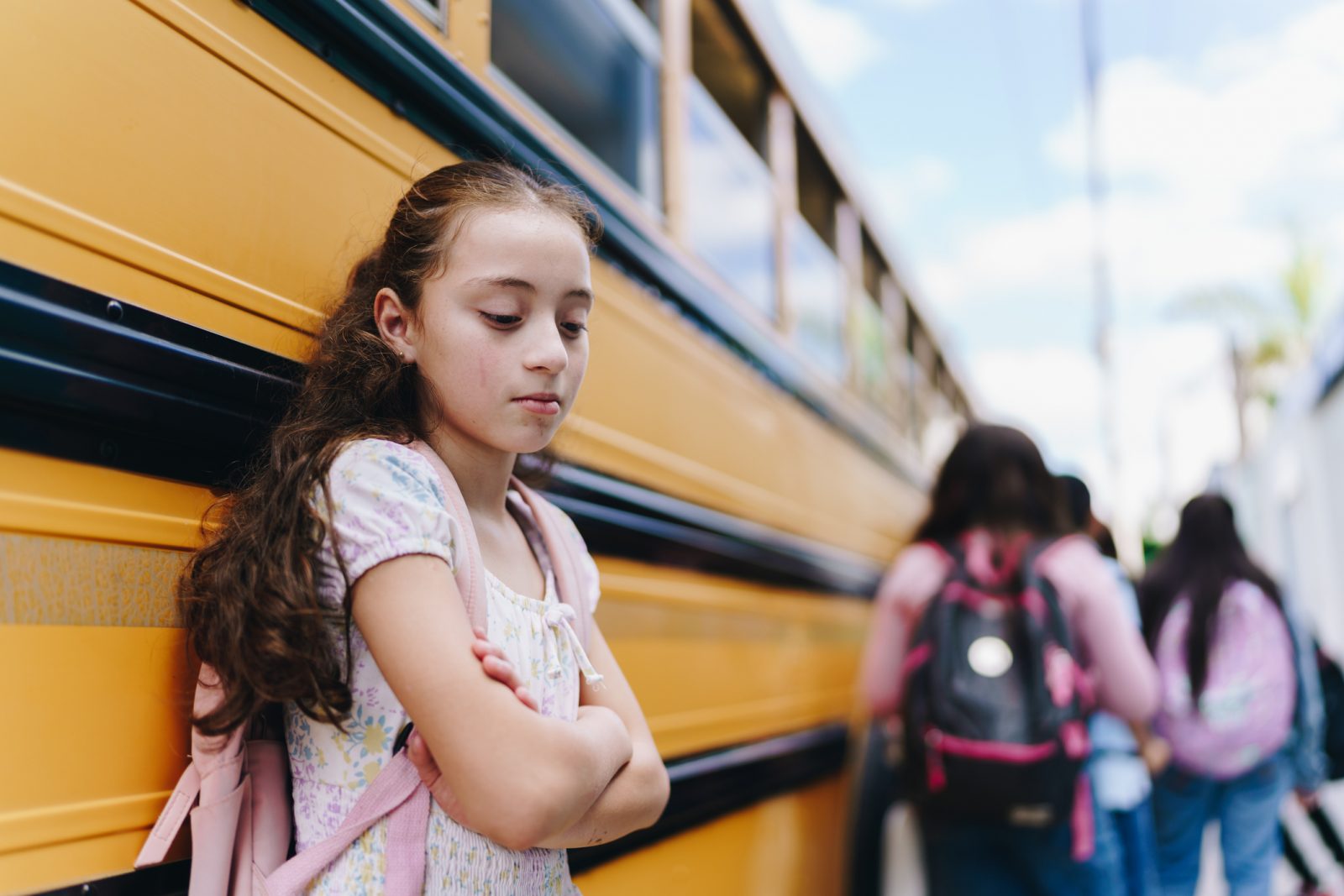
 Experts from Brock Research on Aggression and Victimization Experience (BRAVE) suggest steps that can be taken by children, parents and teachers to prevent bullying and victimization in the new school year.
A new school year is nearing, and with it comes a timely opportunity for parents and educators to address bullying before it takes hold.
Bullying experts in Brock University’s Department of Child and Youth Studies warn the transition from summer to school creates a window when social dynamics are in flux for children. That shift can mean an increased risk of bullying but also presents several opportunities to get ahead of it.
“Back to school is an exciting time because it can feel like a fresh start,” says Associate Professor Ann Farrell. “But it can be a little bit nerve-racking for some youth, especially if they have a history of experiencing victimization.”
Farrell encourages young people to try new strategies for feeling a sense of belonging this year:
- For those who have been victimized in the past: Get involved in an extracurricular activity to help build your confidence and make new friends.
- For those who have perpetrated bullying: Find positive ways to gain approval from peers and work with others to accomplish shared goals.
- For those who witness bullying: Ask yourself what you would hope your friends would do if they saw a similar situation involving you — either as a victim or as a bully.
Professor Tony Volk says families play a key role in supporting children when it comes to bullying.
While there is no single red flag for parents to watch out for, several subtle hints can indicate victimization, such as changes in how students enjoy school, how often they feel ill, lethargy or signs of anxiety. Volk adds that children often hide victimization, requiring parents to pay particular attention to these indicators.
Just as important for prevention, he says, is parental monitoring of children who have perpetrated bullying. Keeping an ear open for talk about winners and losers or declarations that people “deserve” their treatment can help parents identify problems.
In all cases, Volk says consistently asking open-ended questions such as “How was your day?” gives parents their best chance to notice shifts.
“Keep regular, open lines of communication and look for patterns that change. Having regular communication, even if it seems trivial, can help you find clues you’d otherwise miss,” he says.
Assistant Professor Natalie Spadafora says educators rely on parental engagement and support when it comes to early predictors of bullying, such as incivility.
“Left unchecked, low-level classroom incivility predicts higher-level behaviours like bullying later on. So, it disrupts the learning environment, but it also leads to bigger issues,” she says. “If we can get to the root of these lower-level behaviours and correct them, that can be really beneficial overall.”
Social skills like civility are learned from a very young age, but many teachers participating in Spadafora’s research have reported that some young children come to school without the skills they need to meet classroom community expectations.
“It takes time to correct a child who is demanding juice, for example, by asking the child to ask nicely and say ‘please’ before they get their drink,” Spadafora says. “But we spend that time, because we want to raise civil children who become civil adults.”
Associate Professor Naomi Andrews says the support of educators in the early days of the school year can have a big overall impact as children settle into new social structures and hierarchies — a time when uncertainty can result in increased instances of bullying.
Andrews encourages teachers to consider the social architecture of their classrooms and use their own observations of children in and out of class, as well as input from other educators and colleagues in the school environment, to take proactive measures.
“Teachers who are aware of social nuance in the classroom or school, especially at the beginning of the school year, can intentionally plan the classroom space,” she says. “If they know which kids might be more likely to struggle or have social challenges, they can strategically seat them with pro-social, kind kids to help integrate them within some supportive peer networks.”