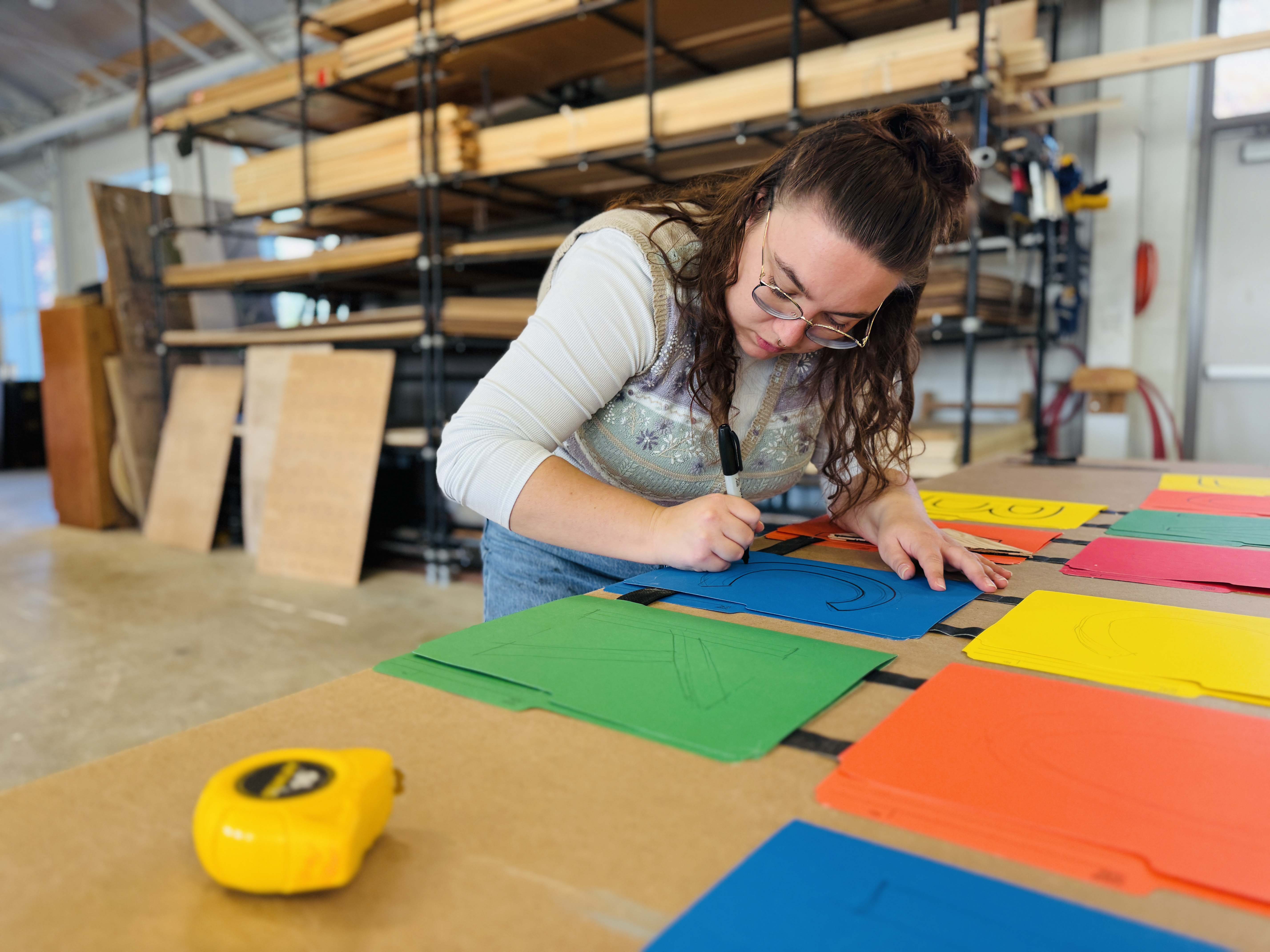
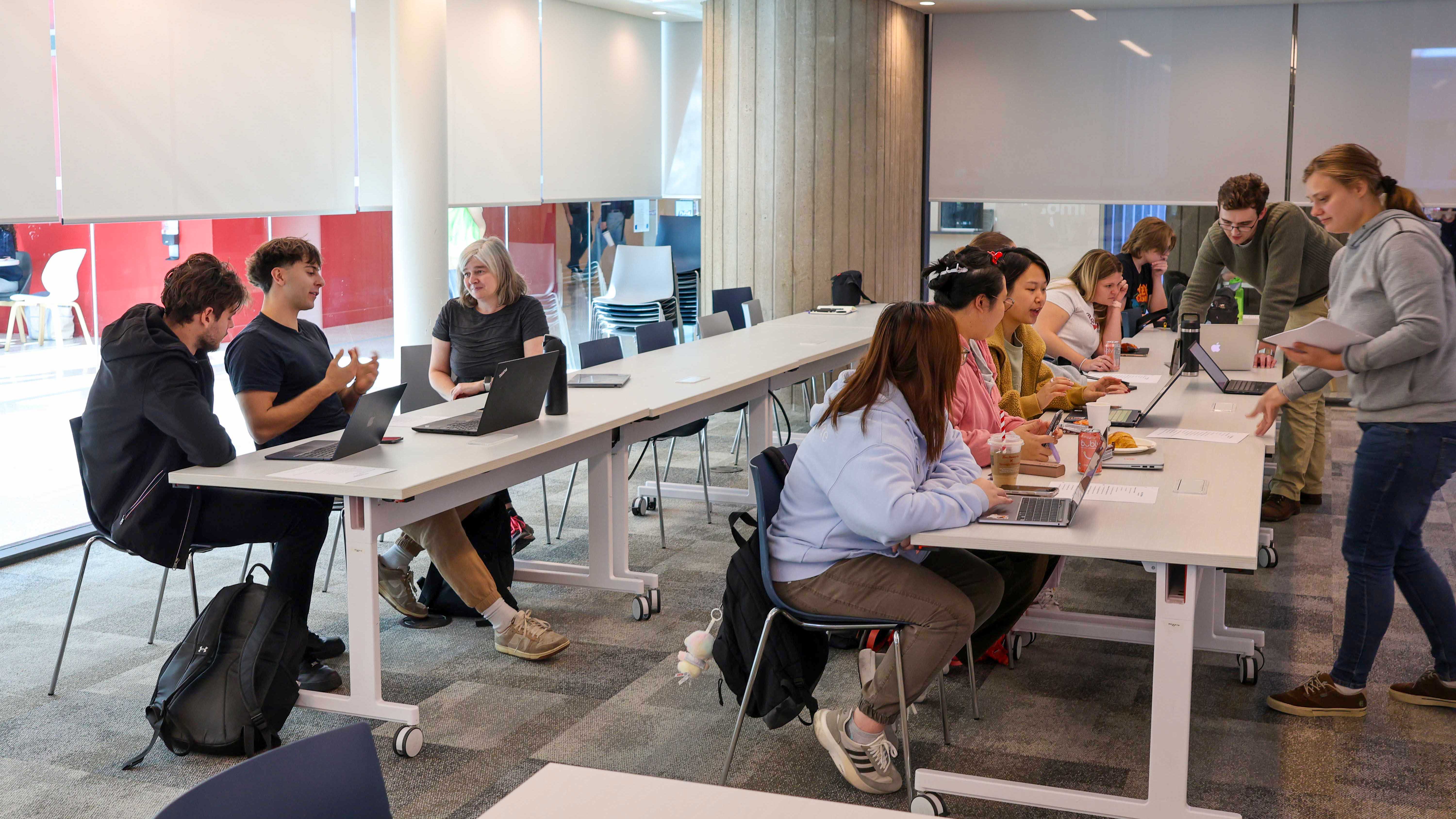
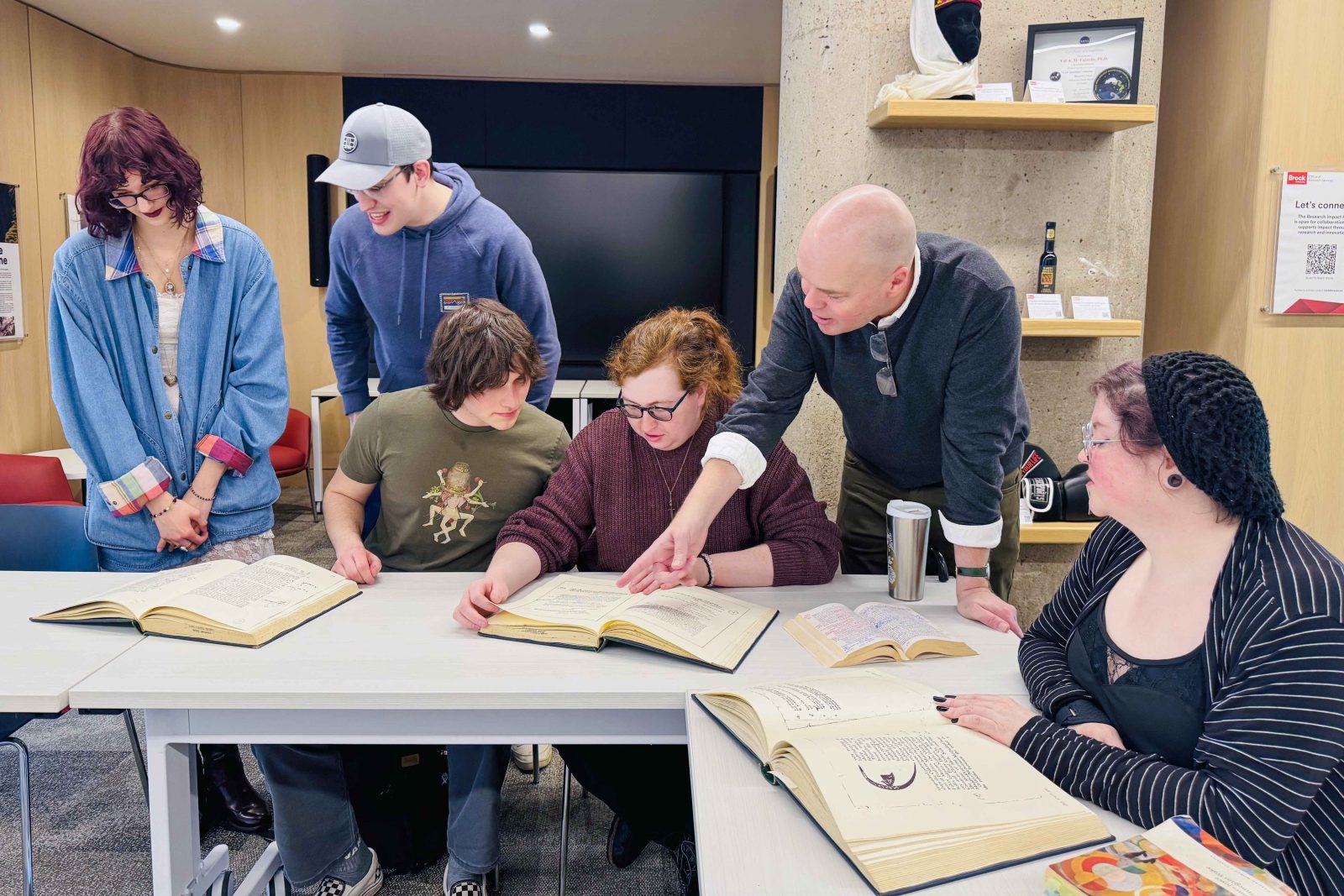
 The acquisition of the James Joyce Archive (JJA) by the Brock University Library earlier this year caught the attention of English Language and Literature students and Joyce scholars alike. Pictured above from left to right is the Finnegans Wake Read Group: Fourth-year English Language and Literature student Sacha Perlaky, fifth-year Concurrent Education student Quentin Ferrari, Fourth-year English Language and Literature student Mathew Wuhlar, English Language and Literature graduate Kate Barton (BA ’20), Professor and Chair of English Language and Literature Tim Conley and Visual Arts graduate Brenna MacDougall (BA ’13, MA ’19).
As a scholar of twentieth-century literature, Tim Conley is well acquainted with the perils and delights of studying Irish novelist James Joyce, the author of notoriously dense books widely considered some of the most difficult to read.
Now, thanks to a recent acquisition of the James Joyce Archive (JJA) by Brock University Library, the Professor and Chair of English Language and Literature is helping students decode Joyce’s works and write the next chapter in their own literary journeys.
Published by Garland Publishing in 1978, the JJA is comprised of 63 volumes containing Joyce’s work, from his early poetry to Ulysses and Finnegans Wake. Though it’s been out of print for years with few copies in circulation, Conley and the Brock University Library managed to secure the collection now housed at the University’s main campus.
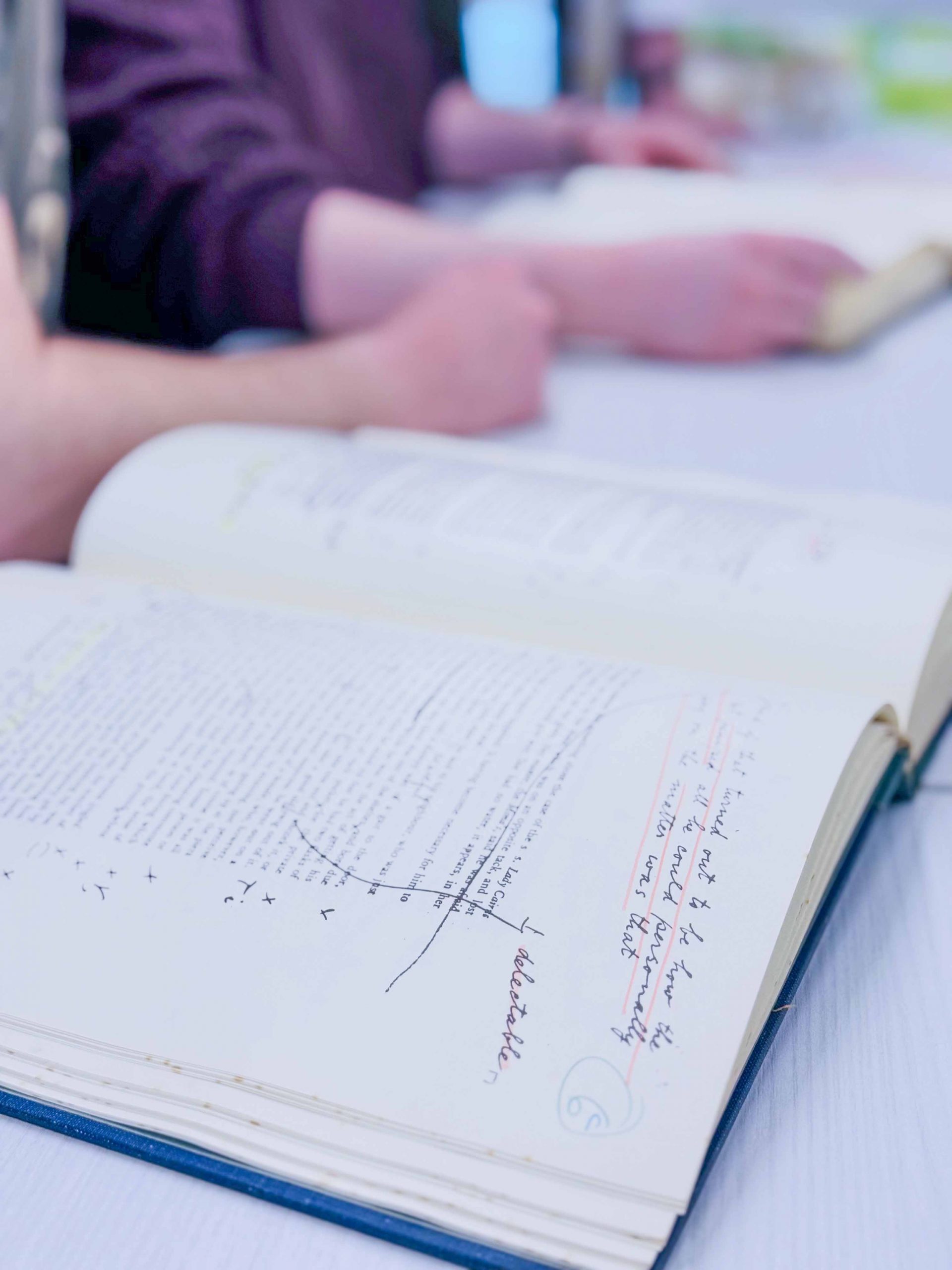
From his early poetry to Ulysses and Finnegans Wake, the James Joyce Archive, published by Garland Publishing in 1978, is comprised of 63 volumes containing Joyce’s work. The collection now available at in the Brock University Library is an invaluable resource for Joyce scholars, especially undergraduate and graduate students learning about Joyce’s significant influence on modern literature and stream-of-consciousness storytelling.
Conley said the archive is an invaluable resource for Joyce scholars, especially undergraduate and graduate students learning about Joyce’s significant influence on modern literature and stream-of-consciousness storytelling.
As well as Joyce’s published works, the collection also includes reproductions of literary drafts, proofs and typescripts (a typed copy of a literary composition) that show handwritten annotations, comments and thoughts from the author himself.
“Joyce wrote his comments on the left of the page, often connecting his notes to certain paragraphs and sections. This allows us to see and follow his writing process, almost a reconstruction of how Joyce wrote, so we can learn about his style and thought process,” said Conley.
What is abundantly clear is that Joyce could simply not help himself from adding layer upon layer to his texts.
“Joyce’s plays on words, puns and other anecdotes he wrote on these pages give us a glimpse to one of the most fascinating minds in literary history,” Conley said.
In addition to teaching English classes about Joyce, Conley leads the Finnegans Wake Reading Group at Brock. The group gathers dedicated Brock community members who collectively read Finnegans Wake over the course of year — a book most deem “unreadable,” Conley says, because of its length and complexity.
Fourth-year English Language and Literature student and reading group member Mathew Wulhar, who won a scholarship last summer to go to the Joyce Summer School in Trieste, Italy, said having access to the Joyce archive has allowed him to reflect on his own writing process.
“Being able to understand how works like Finnegans Wake and Ulysses evolved helped me think about how I write. It has also helped me work through how to tackle and understand works that are so dense,” he said.
For Brock graduate Brenna MacDougall (BA ’13, MA ’19), who joined the reading group as a student, the acquisition of the collection sends an important message for anyone interested in pursuing research related to Joyce studies.
“Brock having this invaluable resource signals there are lots of opportunities at the University for students to develop research avenues and get to know the genetics of Joyce’s texts,” she said.
Conley’s upcoming fourth-year Ulysses seminar will be working with the JJA, and he looks forward to resuming the Finnegans Wake Reading Group in the fall and welcoming new interested members.
“Joyce’s biographer, Richard Ellmann, said that we are still learning to be Joyce’s contemporaries. Strange to say, that seems ever more true the more we study him and his creative processes — but what makes it all the more exciting is how collaborative that learning enterprise is,” Conley said.