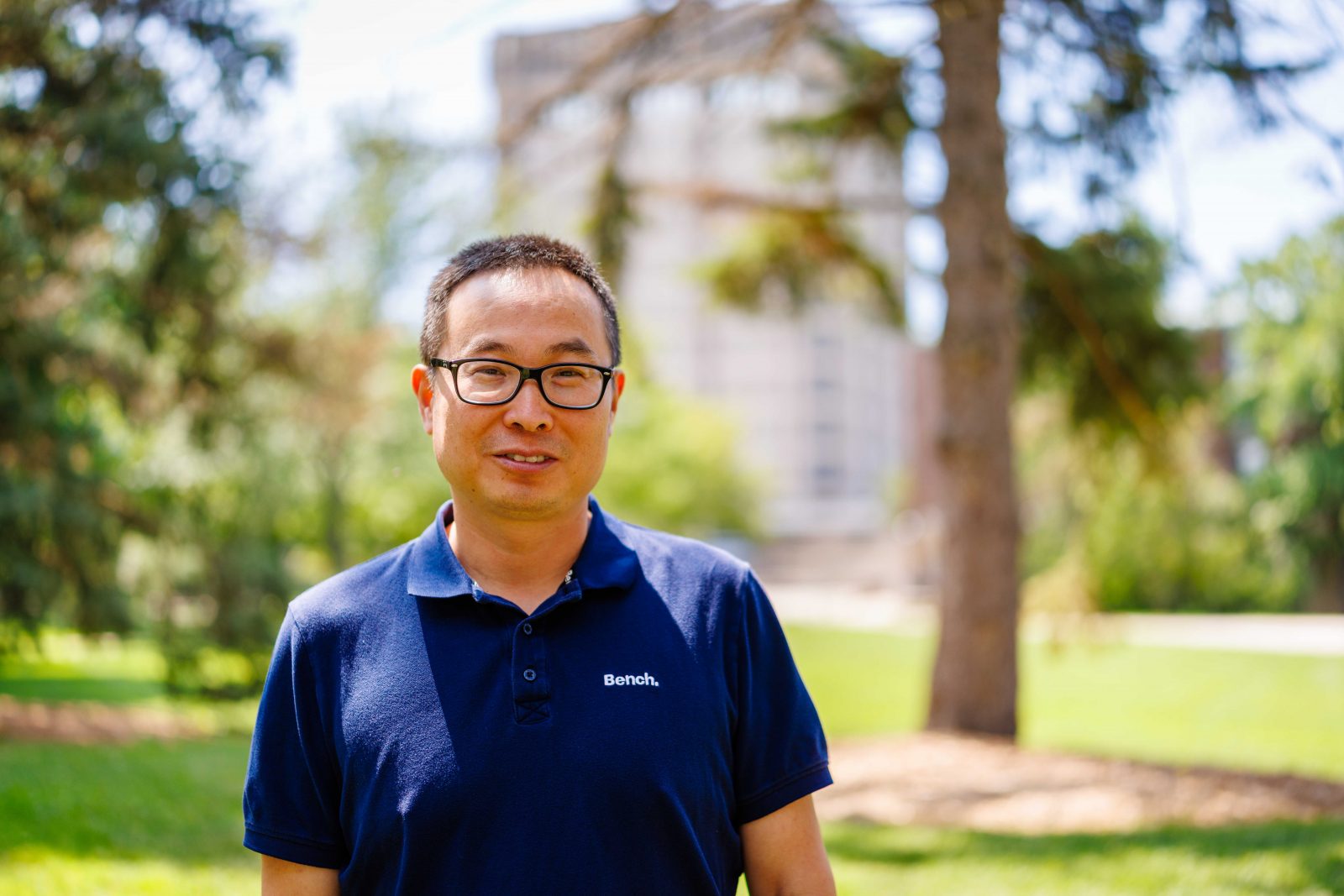
 Yifeng Li, Associate Professor of Computer Science and Canada Research Chair in Machine Learning for Biomedical Data Science, has created an artificial intelligence model with the goal of helping growers detect grapevine viruses at a very early stage.
Much like doctors use diagnostic imaging to detect human illnesses, Associate Professor of Computer Science Yifeng Li is aiming to build an app that would allow farmers to detect grapevine viruses using photos — long before symptoms appear.
Li recently presented his research at the Ontario Research Fund – Research Excellence (ORF–RE) Knowledge Transfer Day. Hosted by Brock’s Cool Climate Oenology and Viticulture Institute (CCOVI), the July 29 event brought together more than 30 scholars, students and industry research partners as well as an official from the Canadian Grapevine Certification Network.
“It’s important to share the results of our research and all of the work with our industry partners,” says CCOVI Senior Scientist Malkie Spodek, who co-organized the event with CCOVI Senior Scientist Jennifer Kelly. “This gathering is also an opportunity to get feedback from the industry to understand how we can apply this research to broader questions.”
The 11 featured projects — with the themes Start Clean, Enhance Resilience, Stay Clean and Stay Competitive — fall under CCOVI’s VINO Solutions initiative, funded by an ORF–RE grant led by Principal Investigator Debbie Inglis to help the industry combat threats such as plant viruses, pests and climate change while planning for a competitive wine industry future.
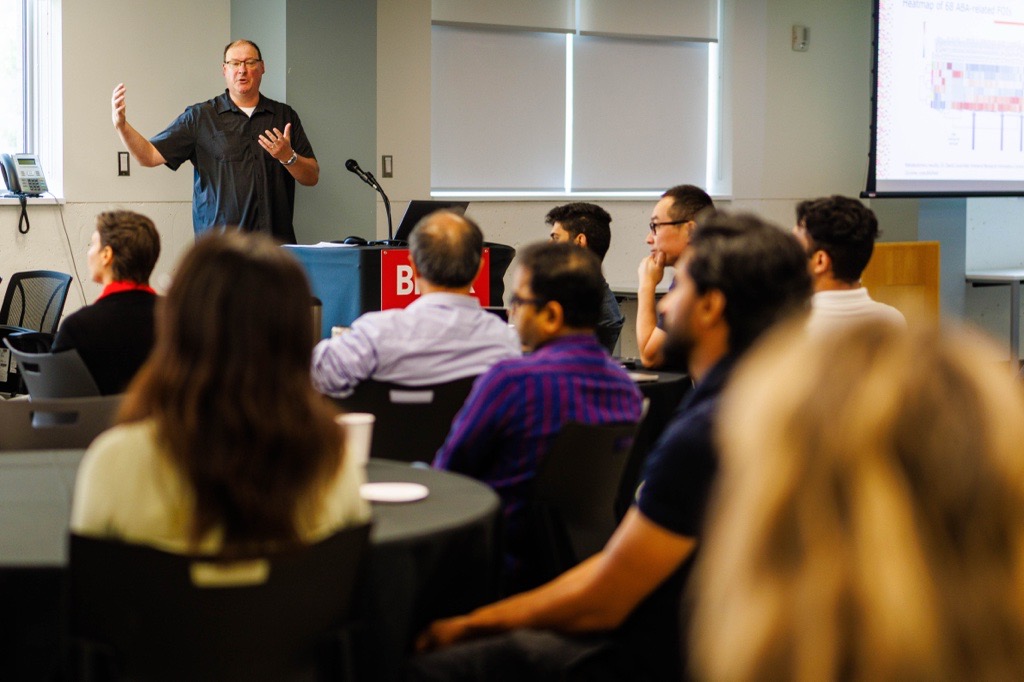
Associate Professor of Biological Sciences Jim Willwerth shared his research on identifying superior grapevine material during the Ontario Research Fund – Research Excellence Knowledge Transfer Day hosted by Brock University’s Cool Climate Oenology and Viticulture Institute on July 29.
Li and his research team, for example, are collecting images of grapevines at two Niagara farms using smartphones and a highly specialized hyperspectral camera that picks up an array of colours invisible to the human eye. These images will be fed into a new artificial intelligence (AI) program Li has created and is training to recognize very early visual changes in vines that turn out to be infected. He plans to develop an app for that analyzes images of vines taken by growers throughout the season for the presence of viruses.
“This will let growers know exactly what is happening on their farm, so they can take proactive and preventive measures to prevent the spread of the virus on a large scale,” says Li, Canada Research Chair in Machine Learning for Biomedical Data Science.
Also included in the presentations was Associate Professor of Biological Sciences Jim Willwerth’s work in selecting superior plant material, which involves evaluating rootstocks and clones of some of the important varieties grown in Niagara and new cultivars that have more disease resistance.
Willwerth is identifying biological markers found in the vines’ genotypes that respond well to cold hardiness, drought and other extreme environmental conditions to aid selection of resilient plants.
“We’re working with industry partners to expand the research into the Brock University Norris W. Walker Research Farm,” says Willwerth. “We have cold hardy hybrids, rootstocks, cultivar rootstock trials and disease tolerant varieties that we’re growing on the farm.”
Project presentations at CCOVI’s ORF–RE Knowledge Transfer Day were grouped under the VINO Solutions themes.
Start Clean:
- This theme included a pathogen-free rapid clonal micropropagation and grafting protocol development towards the creation of a National Clean Plant Program, led by CCOVI Director Debbie Inglis. Also covered was research by Professor of Biological Sciences Ping Liang on genotype, phenotype and authentication studies and characterization of grape materials and vines to develop true-to-type testing.
Enhance Resilience:
- This theme included two projects headed by Willwerth to identify superior grapevine material: one involving a novel evaluation matrix that intersects disease tolerance, yield and climate change and the other looking at genomic markers, metabolic signatures and evaluating genotype-based climate change mitigation strategies.
Stay Clean:
- As well as Li’s new AI model, this theme included the development of trapping and mating disruption methods to monitor and control major insect vectors of grapevine viruses for more effective clean grapevine integrated pest management protocols, which Spodek is leading. This theme also includes research by postdoctoral fellow Bhadra Vemulapati on the impact of grapevine red blotch and leafroll virus 3 on popular interspecific hybrid grapevine cultivars in Ontario.
Stay Competitive:
- This theme included a metagenomic high throughput sequencing approach to more efficiently and accurately identify yeast species and strains for Ontario competitiveness, local production autonomy and improved quality, headed by Liang. Also covered were two projects led by Inglis focus on wine flavour modification through non-traditional yeasts, oenological treatments and taint remediation and a project led by CCOVI Oenologist Jennifer Kelly evaluating new fungus-resistant grape varieties, local Ontario yeast strains and developing novel production methods to make low alcohol wine.