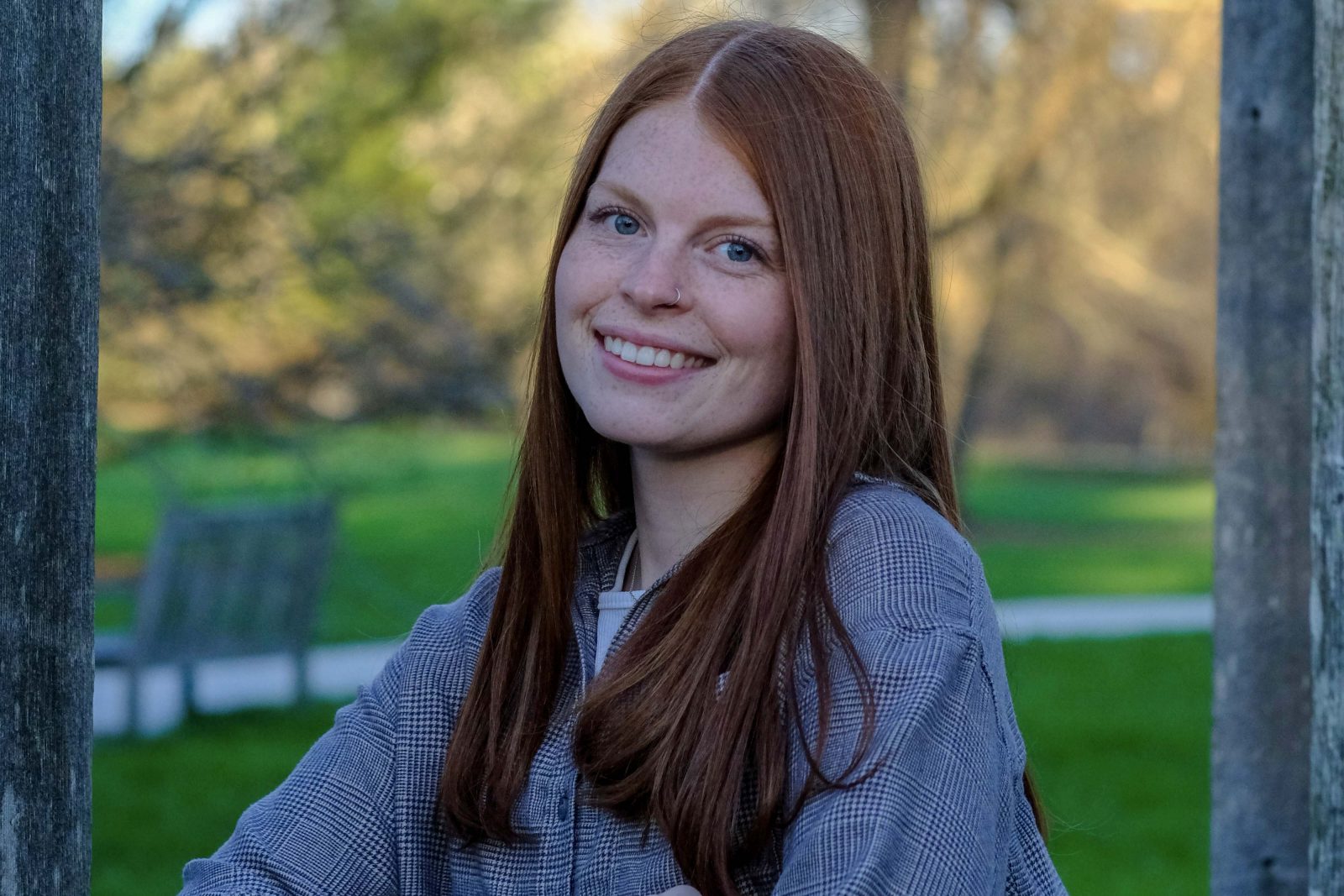
 Emma Lewis (BPhEd '23, MA ’26) received the Inclusion, Diversity, Equity and Accessibility Graduate Student Research Scholarship from Physical and Health Education Canada for her research on how gender stereotypes affect the perception of women who are authority figures in physical education.
Gender stereotypes continue to shape how women are perceived as authority figures in physical education (PE) classrooms across Ontario according to the research of a recent Brock graduate.
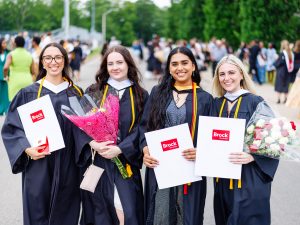
Emma Lewis (BPhEd ’23, MA ’26), who graduated with a master’s in Applied Health Sciences during the University’s 119th Convocation in June, was awarded the Inclusion, Diversity, Equity and Accessibility (IDEA) Graduate Student Research Scholarship from Physical and Health Education Canada (PHE Canada) for her graduate research.
Her interest in the topic stems from her own experiences. While she was involved in sports growing up and loved PE classes, Lewis also recalls situations where girls were included only to meet minimum team requirements and moments when she felt pressured to participate while injured.
“That’s when I realized that girls were undervalued in the sports environment,” she said.
She encountered similar dynamics in coaching and teaching roles.
“I felt that my gender affected how much respect I experienced as an authoritative figure,” she said. “This is not only happening to me — it’s a societal issue that has been reproduced for years.”
Co-supervised by Associate Professors of Kinesiology Nathan Hall and Rob Millington, Lewis interviewed women teaching PE across the province.
Using thematic analysis and participants’ own words, she says she aimed to “give the participants a voice” in the research.
“They all had some sort of experience where they felt that their gender has affected their experience,” she said.
Participants described facing gender discrimination from both students and parents, sharing their experiences of being treated differently than men as authority figures in PE.
Her finding revealed both interpersonal challenges and systemic barriers.
“They kind of have to deal with something and then start the next day fresh as if it didn’t happen. Unless something is detrimental, sometimes they’re taught to not speak up about it,” she said.
Lewis says the onus is often on women to find solutions themselves, but she believes everyone has a role to play in dismantling these obstacles.
“I wanted to ask these questions because I refuse to accept that discrimination like this should continue to be normalized,” she said.
Her research highlighted teaching strategies already in use to help remove gender bias from the PE space, such as grouping students by their interests rather than by gender.
Looking ahead, Lewis aims to broaden access to her findings beyond academic audiences by exploring ways to help teachers already working in the field.