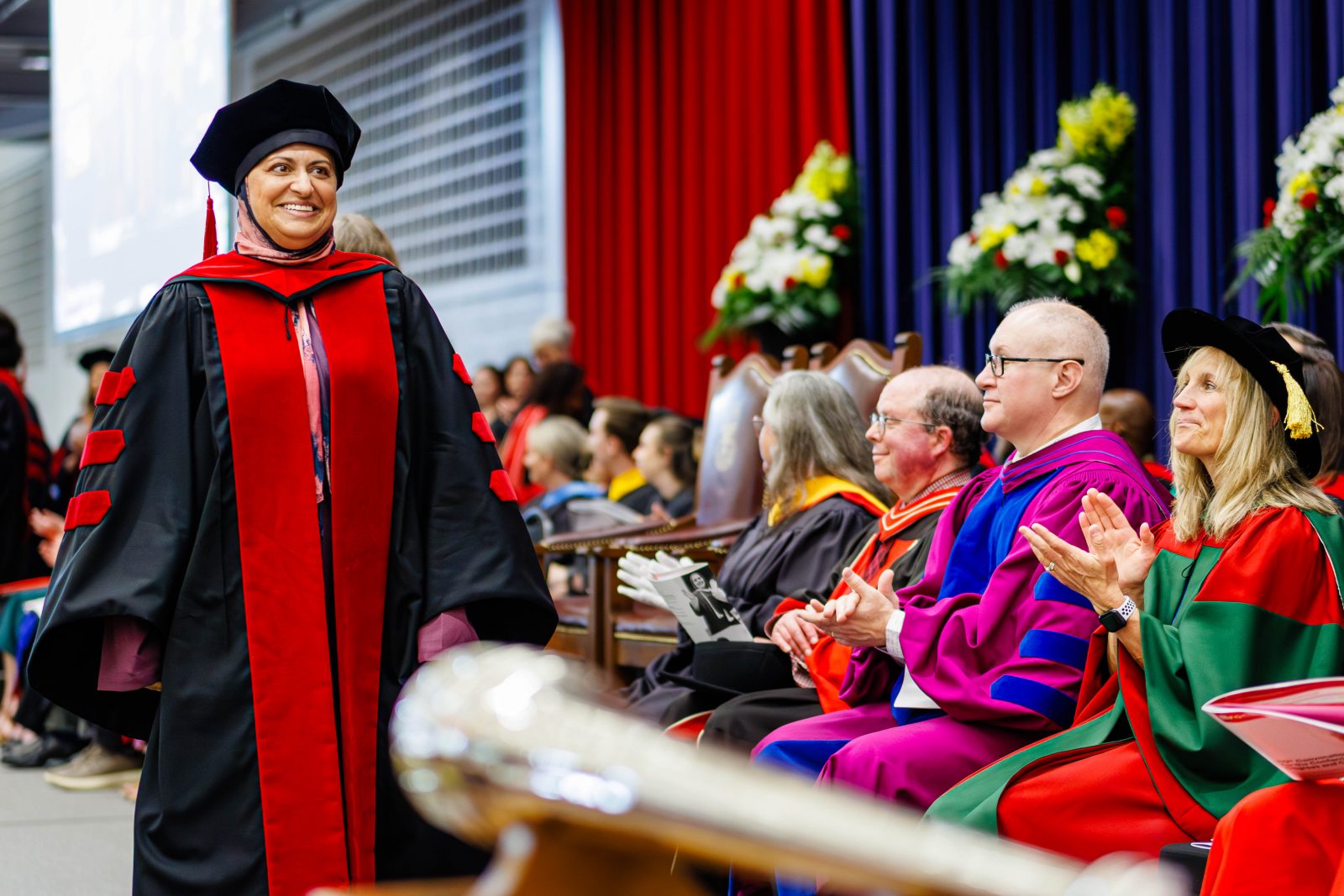
 Nisreen Mohamad Alameddine (PhD ’26) graduated with a PhD in Educational Studies on Thursday, June 11 during Brock University's 119th Convocation.
 Inspired by the students they’ve encountered as educators, Isabella Favero (BA ’24, BEd ’24, MEd ’26) and Nisreen Mohamad Alameddine (PhD ’26) are leveraging their research to help learners thrive.
Both received their graduate degrees on Thursday, June 11 during Brock University’s 119th Convocation.
A Master of Education graduate, Favero’s research explores digital text features in learning tools designed to support students’ word decoding — or the ability to sound out words — an essential part of learning to read.
She studied how students engage with features on various digital text platforms — including sticky note tools, annotation features, web browser extensions and text-to-speech capabilities — that help young learners break down words into manageable chunks.
“I wanted to understand, when they’re reading, how students can integrate the tools in a meaningful way to help them with word decoding skills when they’re struggling,” she said.
Favero’s approach examined behavioural, affective, cognitive and social engagement of students in Grades 4 to 6 in relation to literacy.
“I’m very inspired to work with these students because at this age, students are no longer learning to read — they are reading to learn,” she said.
Students in this age range are reading science and articles for social studies, for example, and they begin falling back if they are struggling, Favero said.
“We see significant academic decline and separation with students in between Grades 4 and 6, so I wanted to provide specific and targeted support for this critically important time of their lives and education,” she said.
Favero’s research was inspired by students she worked with during a classroom placement for her Concurrent Teacher Education degree. She saw many students using text tools to help them read on devices, sometimes skipping over the actual reading of words.
“It stuck with me, and I knew we needed to support some learners further, including targeted intervention and guidance on these tools,” she said.
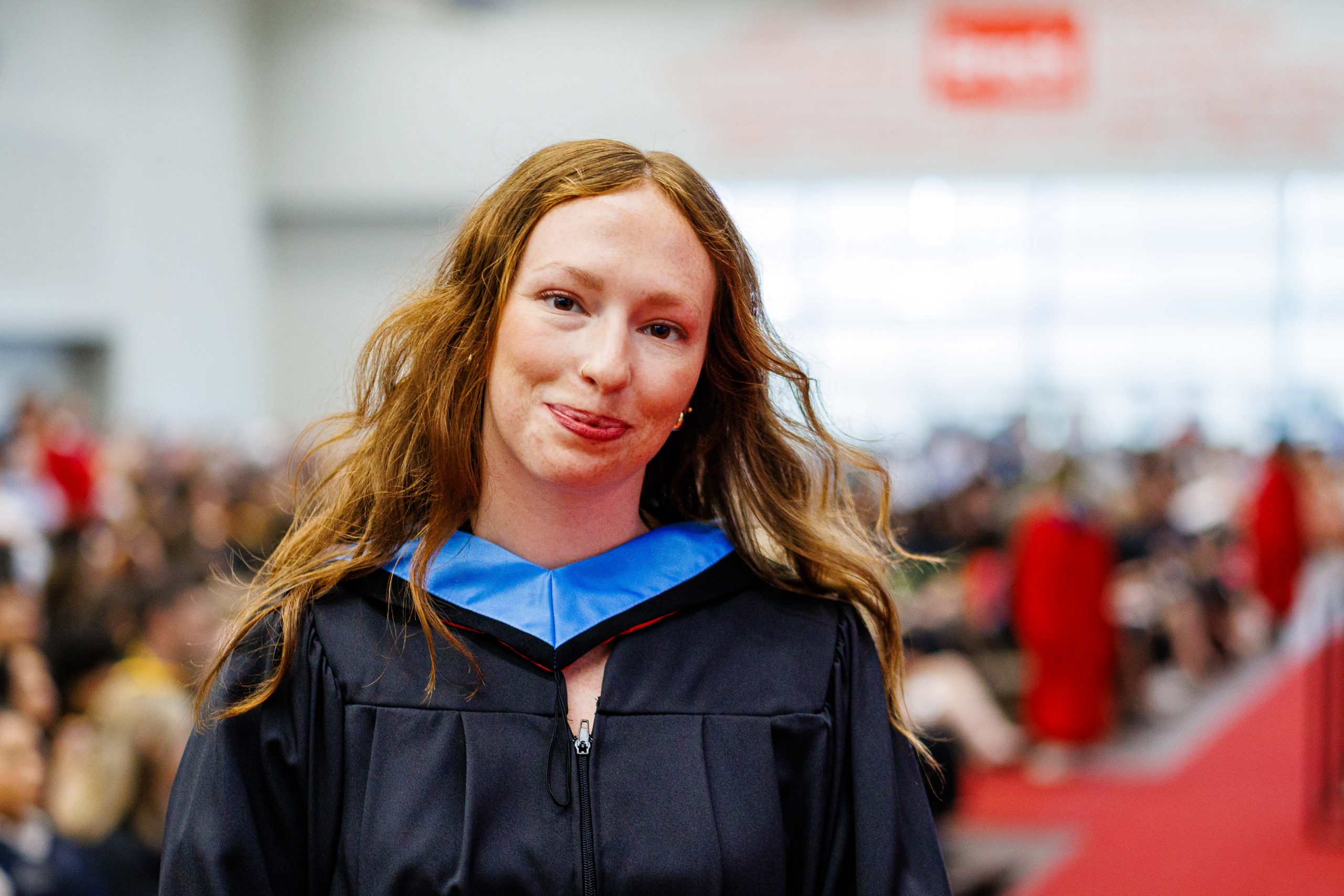
Isabella Favero’s (BA ’24, BEd ’24, MEd ’26) graduated with a Master of Education degree on Thursday, June 11 during Brock University’s 119th Convocation.
Favero undertook her research through the Brock Learning Lab, working with the families and their tutors to gain insight into their learning experiences.
Through her future doctoral studies, Favero plans to explore how digital text tools could be made more widely accessible so “no students fall through the cracks, and everyone can realize their full potential.”
Like Favero, Alameddine is making valuable contributions through her research to support the well-being of students. Alameddine graduated Thursday with PhD in Educational Studies.
Motivated by her career as a full-time teacher, she began her doctoral work interested in culturally and linguistically diverse students, but her interest quickly shifted towards her own community and supporting newcomer Muslim students.
“I want to help newcomer students as they negotiate and navigate multiple worlds and face big questions about what aspects of their identity are retained and what changes,” she said.
Alameddine’s research also examines the role of school systems, support systems and community.
“My teaching led me to my research. I saw student experiences, listened to their anecdotes and reflected on the significance these stories and how they might shape teachers’ perceptions, specifically of newcomer Muslim students,” she said.
Alameddine said there is heavy identity work that happens between the ages of 12 and 17 — when students are generally in Grades 7 to 12 — that can be very complex.
“It’s a transformative time for all teenagers. But when it comes to newcomers, they are also navigating the presence of a new environment with new expectations and ways of operating,” she said.
Alameddine found that while narratives spoke to the need of more support in terms of cultural awareness and unpacking biases, many newcomer students spoke to the power of teachers who affirmed and supported their presence.
“In many instances, students navigating challenges in their new environment only kept going to class because of a specific teacher who encouraged them — that is a powerful realization for any educator,” she said.
Through her research outcomes, Alameddine hopes teachers will embrace the influence they can have on student’s lives and futures.
“This needs to be understood, acknowledged, and most of all, celebrated.”