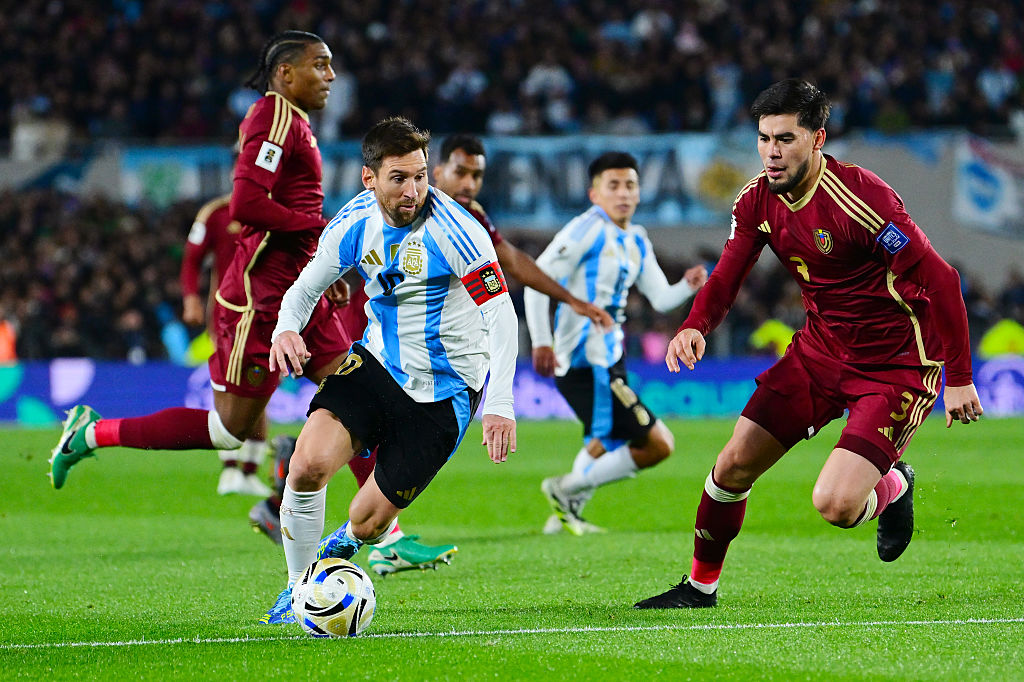
 Lionel Messi of Argentina controls the ball whilst under pressure from Wilker Ángel of Venezuela during the South American FIFA World Cup 2026 Qualifier match between Argentina and Venezuela at Estadio Más Monumental Antonio Vespucio Liberti on Sept. 04, 2025 in Buenos Aires, Argentina. (Photo by Marcelo Endelli/Getty Images)
If soccer’s superstars seem sluggish during June and July’s FIFA World Cup 2026, it might be because they’re hitting the pitch at the wrong time of day.
With 2026 expected to be one of the hottest years on record, and experts raising concerns about player well-being, FIFA is instituting mandatory three-minute hydration breaks midway through each half of every game during the tournament — held in several cities across North America.
While this is a welcome change, Brock University heat expert Toby Mündel says FIFA organizers need to go a step further in protecting players from heat stress.
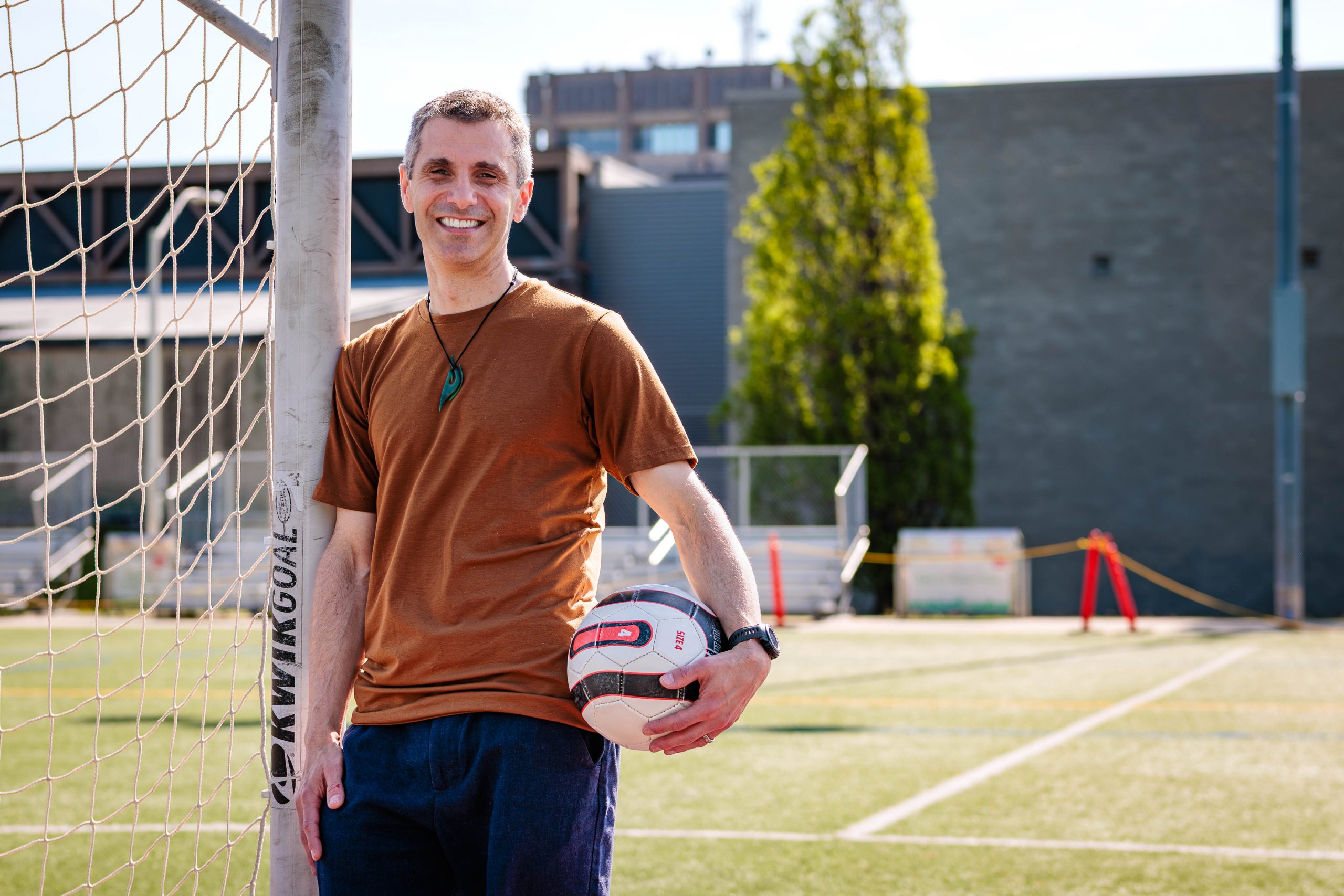
Toby Mündel, Brock University Professor of Kinesiology and Canada Research Chair in Extreme Human Environments, is calling on FIFA organizers to consider shifting game times to enhance player safety.
The Professor of Kinesiology and Canada Research Chair in Extreme Human Environments is part of an international research team that found matches taking place in the evening ensure the least detriment to athletes’ health and optimal performance in hot environments.
The team, headed by Samuel Wanner at Universidade Federal de Minas Gerais in Brazil, is among the first to examine the impacts of humidity, wind speed and solar radiation — which Mündel says generally line up best in the evening — on athletic performance.
Relative humidity describes the amount of water vapour in the air compared to how much vapour can potentially exist at that particular temperature, while solar radiation refers to energy the sun emits through electromagnetic waves.
The FIFA Club World Cup 2025, which occurred at the same time of year as this year’s tournament and at six of the host cities across the United States, provided the case study for the research.
The team tested whether high relative humidity, solar radiation and air temperature impairs high-speed running and if players run longer distances at higher speeds in the evening compared to the afternoon.
“Given that the World Cup matches are played in different cities with different weather and at different times of day, time of day has not been previously considered and so that was a novel factor we addressed,” Mündel says.
The team examined statistics on how fast and far players ran, air temperatures, game schedules and venues, environmental conditions and other data gathered from FIFA technical reports, mathematical modelling and media coverage.
In their calculations, the researchers used a measurement known as the Wet Bulb Globe Temperature (WBGT), which includes relative humidity, solar radiation and wind speed calculations in addition to air temperature. FIFA also uses the WBGT in its own calculations.
The study’s findings include:
- In 31 of the 57 matches analyzed, players were exposed to conditions of extreme heat illness risk based on a WBGT greater than 28°C.
- As the WBGT reading increased, players ran shorter distances and at slower speeds, confirming that high relative humidity, solar radiation and air temperature impair high-speed running.
- Hyperthermia, which occurs when the body’s core and muscle temperatures are elevated, is likely involved in this reduced performance. Because of this, players chose a possession-based style of play, which prioritizes control of the ball, over a transition-based style, which involves running fast, spreading out and other tactics to quickly regain the ball.
- Players covered less distances at high speeds when relative humidity was high, which is significant as running fast is often a factor in winning a match.
- Athletes ran longer distances in the evening than in the afternoon due to lower environmental heat stress in the evenings compared to the afternoons.
These and other results are explored in the team’s study, “Physical performance in elite male soccer under extreme heat: A case study of the 2025 FIFA Club World Cup,” published in the journal Temperature earlier this year.
Mündel says current and future tournament organizers should consider prioritizing elite soccer players’ performance and health over ticket and television revenue, among other factors, when scheduling games.
“This study emphasizes the importance of advanced planning of match hours and choice of host cities that are less affected by extreme heat,” he says.
Agencies funding the research include the Government of Canada’s Natural Sciences and Engineering Research Council of Canada and the Canada Research Chairs Program.