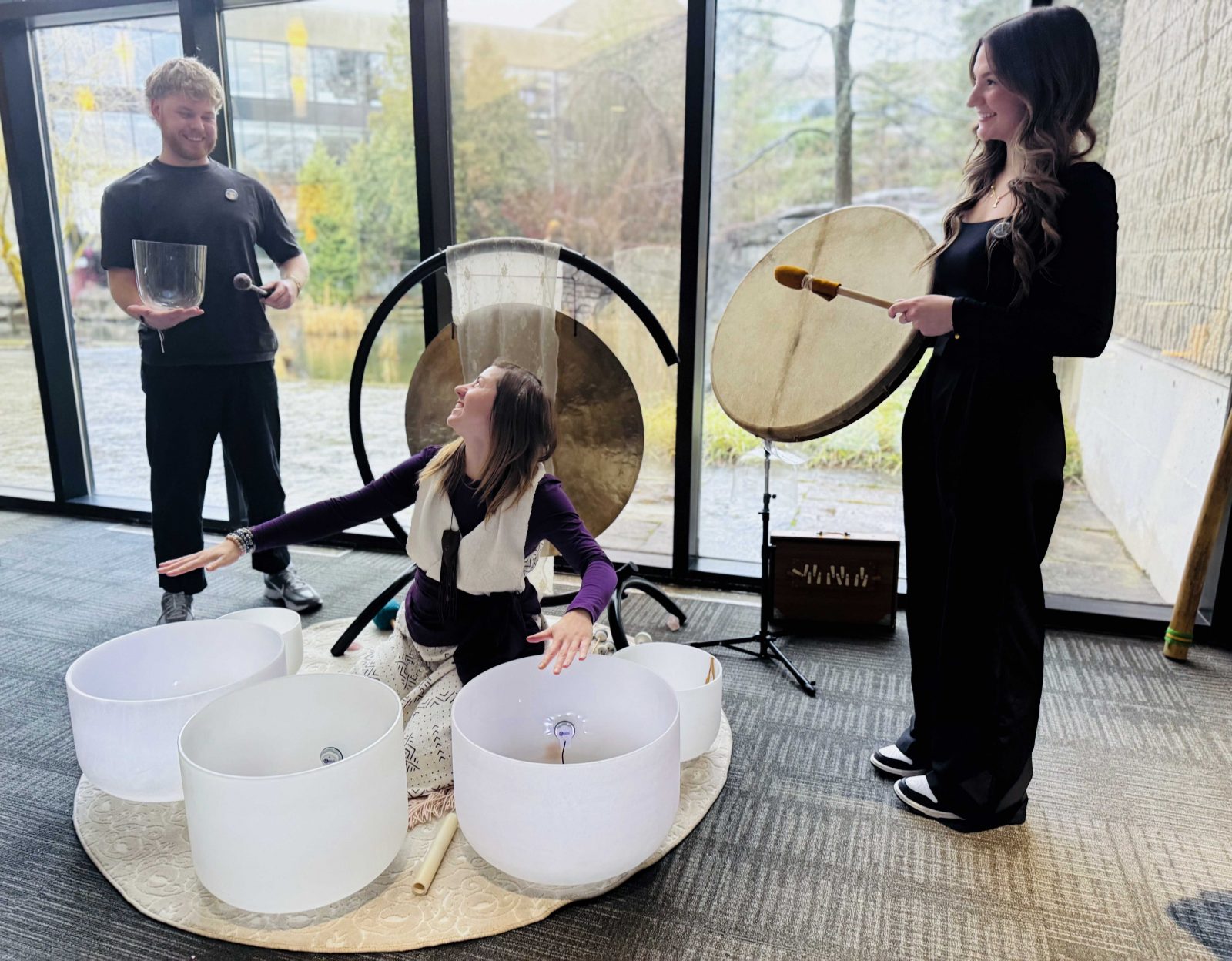
 Faculty of Education Concurrent Education students engaged with music therapy and sound bathing for mental wellness at Amplify: Mind, Music and Well-being. From left are fourth-year Concurrent Education student Cooper Norton, Lauren Bartfai of Sonic Expressions and fourth-year Concurrent Education student Becca Stroeder.
 From exploring sound baths and affirmations to enjoying live music, the Brock community came together last week to foster a proactive culture of care on campus and create space for mental wellness.
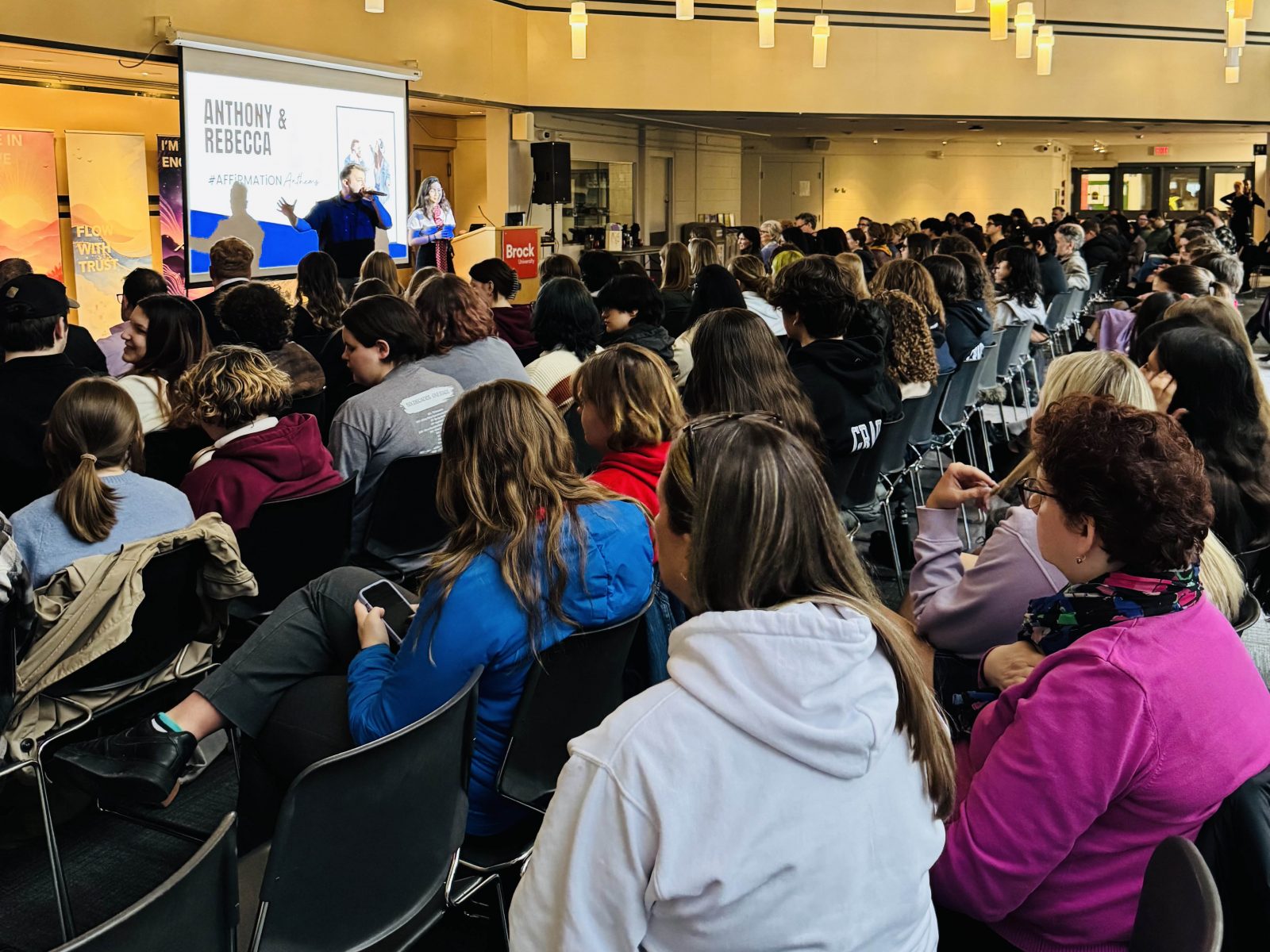
Students, staff and faculty from across campus were joined by local community members and senior high school students on March 11 for a day of immersive learning, exploring the connection between music, mental health and well-being.
The wellness symposium, Amplify: Mind, Music and Well-being, welcomed more than 200 attendees who participated in a lineup of interactive wellness-based activities and career development opportunities.
Organized by the Faculty of Education’s (FOE) Associate Dean’s office, which supports a robust wellness portfolio, the planning team included the FOE’s Wellness Navigator, Concurrent Teacher Education students and research assistants.
The day’s activities were also supported by the Student Wellness and Accessibility Center, the Black Student Success Center and the FOE Academic Advising office.
Professor of Educational Studies Darlene Ciuffetelli Parker said the symposium provided a chance for students to amplify their wellness knowledge and advance their careers.
“Through music, meaningful conversations and interactive activities, our goal was to invite participants to reflect on why a unified culture of wellness should be on the front burner in academic settings. ‘Proactive wellness as campus culture’ is the motto we use,” she said.
Ciuffetelli Parker is engaged in music therapy research alongside collaborators Rachel Finnerty, founder of Music Therapy Academy, and Laurel Trainor at McMaster University. Their work builds on Finnerty’s previous research at McMaster and Ciuffetelli Parker’s narrative inquiry method to research the effects of music therapy with teacher candidate participants in Brock’s six-year Concurrent Teacher Education program.
“Our research team has been exploring the impact and benefits of proactive wellness through music therapy on rigorous teacher education academic programs,” Ciuffetelli Parker said.
The research supports the implementation of group music therapy on campus to proactively manage student stress and anxiety, highlighting the importance of equipping teacher candidates with mental health tools as they enter classroom settings.
Ciuffetelli Parker said that the findings will benefit everyone, not just those studying education.
“Our goal is foster a culture of proactive wellness on and off campus, from when high school students begin thinking about their post-secondary journey all the way through to graduation — and beyond,” she said.
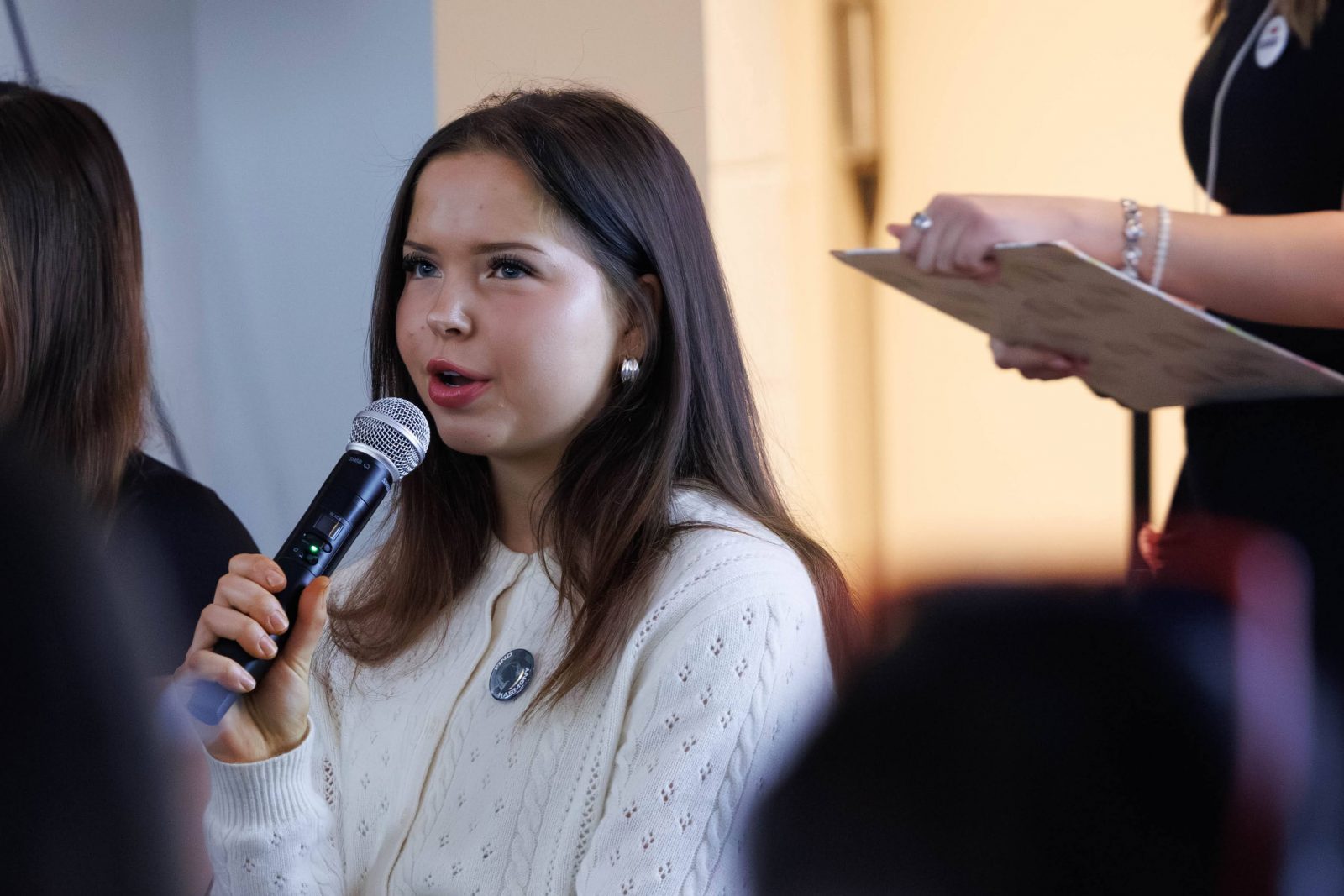
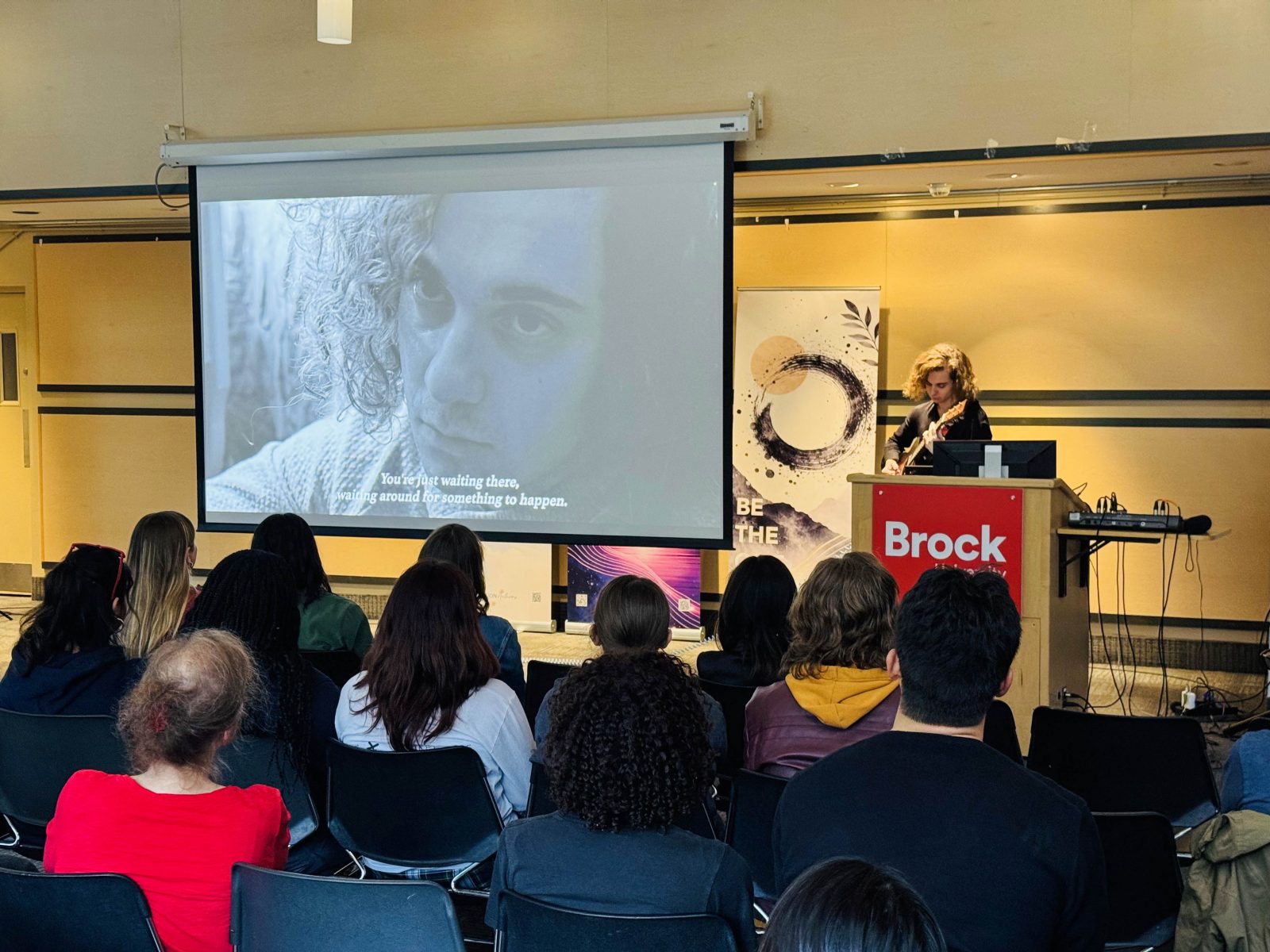
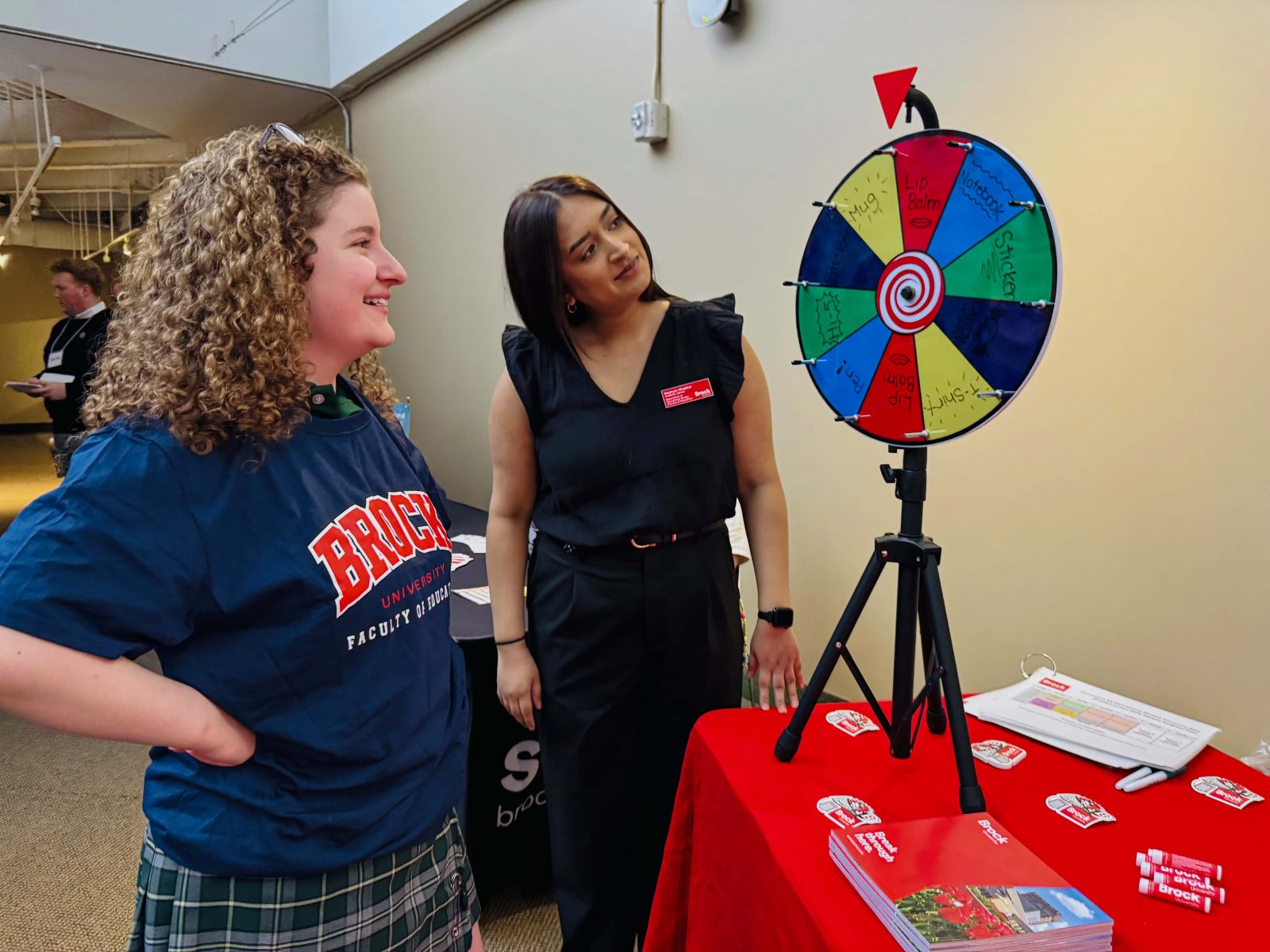
Throughout the symposium, attendees heard from keynote speaker Associate Professor of History Elizabeth Vlossak about her course A Swift History, took part in a Wellness Navigator Panel, heard from a diverse panel of students sharing stories of mental health and wellness, and experienced immersive music performances, sound experiences and mindfulness moments. Participants also had the opportunity to connect with school boards, external organizations and community partners through networking booths.