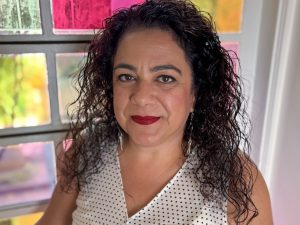
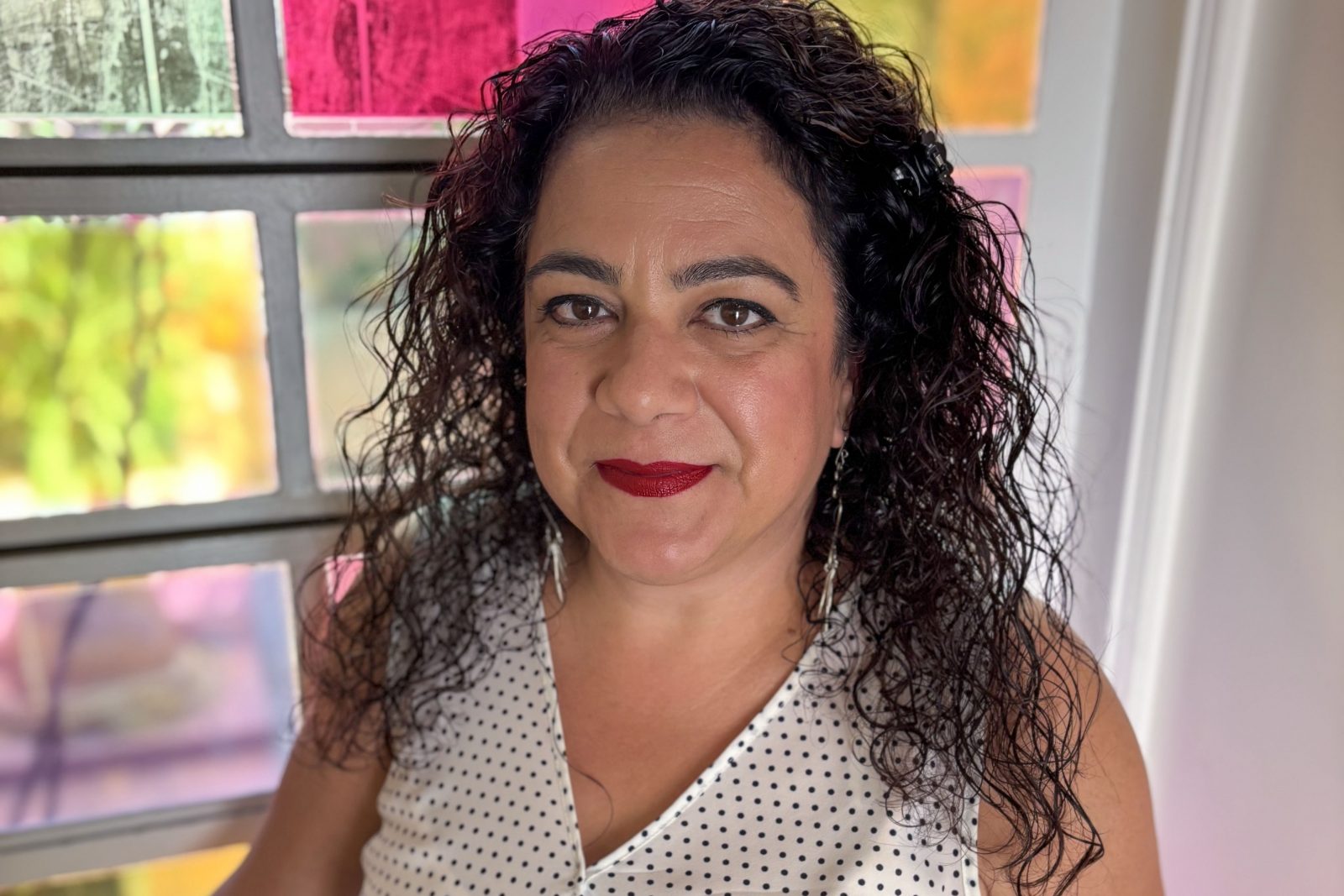
 Associate Professor of Modern Languages, Literatures and Cultures Cristina Santos explores the construct of monstrous women from an interdisciplinary and multi-cultural approach, evaluating the representation of women in literature, film, television, popular culture and mythology.
For Brock University researcher and women’s health advocate Cristina Santos, monstrous female figures in scary stories hold important lessons about the lives and health of women in the real world.
The Associate Professor of Modern Languages, Literatures and Cultures examines depictions of monstrous women in literature, film, television, popular culture and mythology, drawing connections between the horror genre and current policies limiting women’s autonomy in areas across the globe.
“We know that horror in popular culture often functions as social commentary. Scholars have long studied how horror can be politically engaged and provide commentary on major societal changes while also reflecting dominant societal anxieties and fears,” she says.
In recent research, Santos has been exploring traditional stereotypes of monstrous mothers, often cast as the root of evil in popular stories, and the ways these narratives can position the maternal body as an object providing reproductive labour but robbed of its bodily autonomy and individual agency.
“Monstrous mothers are the result of a very hetero-patriarchal context in which there has historically been fear and anxiety about women’s biological reproductive power. Now, we are turning that idea on its head, positioning the maternal body as subject,” she says.
For Santos, the shift in perspective represents a feminist reclamation of women’s bodily autonomy and agency making monstrous mothers no longer the object of horror under constant surveillance and restriction, but an individual — a person, not a function.
The mother figure is the object of horror because stories have historically created these tropes and ideas, she says, “but if we keep remembering that horror is a response to current social changes, it’s reflecting what women who inhabit a reproductive body are going through in real life.”
“We are trying to shift ways of thinking to not just treating these stereotypes as superficial entertainment, but as a sign of the times,” she says.
For Santos, that’s what drives her work — when the horror becomes real.
The impact of her work lies in shedding light on and building compassion for the experience of mothers, or a person who is mothering, whose body autonomy has been compromised or taken away from them.
Santos has shared insights from her research in a recently published book Horror and Mother/hoods in a Global Cultural Imaginary: Representations across Literature, Film, Television and Art, edited by Santos, Rachel Davidson and Sarah Revilla-Sanchez.
“The contributors have done an amazing job of delving into what exactly is the horror when it’s assigned to the mother, to motherhood or to mothering in film, television, literature and art, and how it’s constructed against certain predetermined values and ideals,” she says.
A book launch for the Horror and Mother/hoods in a Global Cultural Imaginary is being held on Wednesday, Oct. 28 in Toronto. Event information is available online.