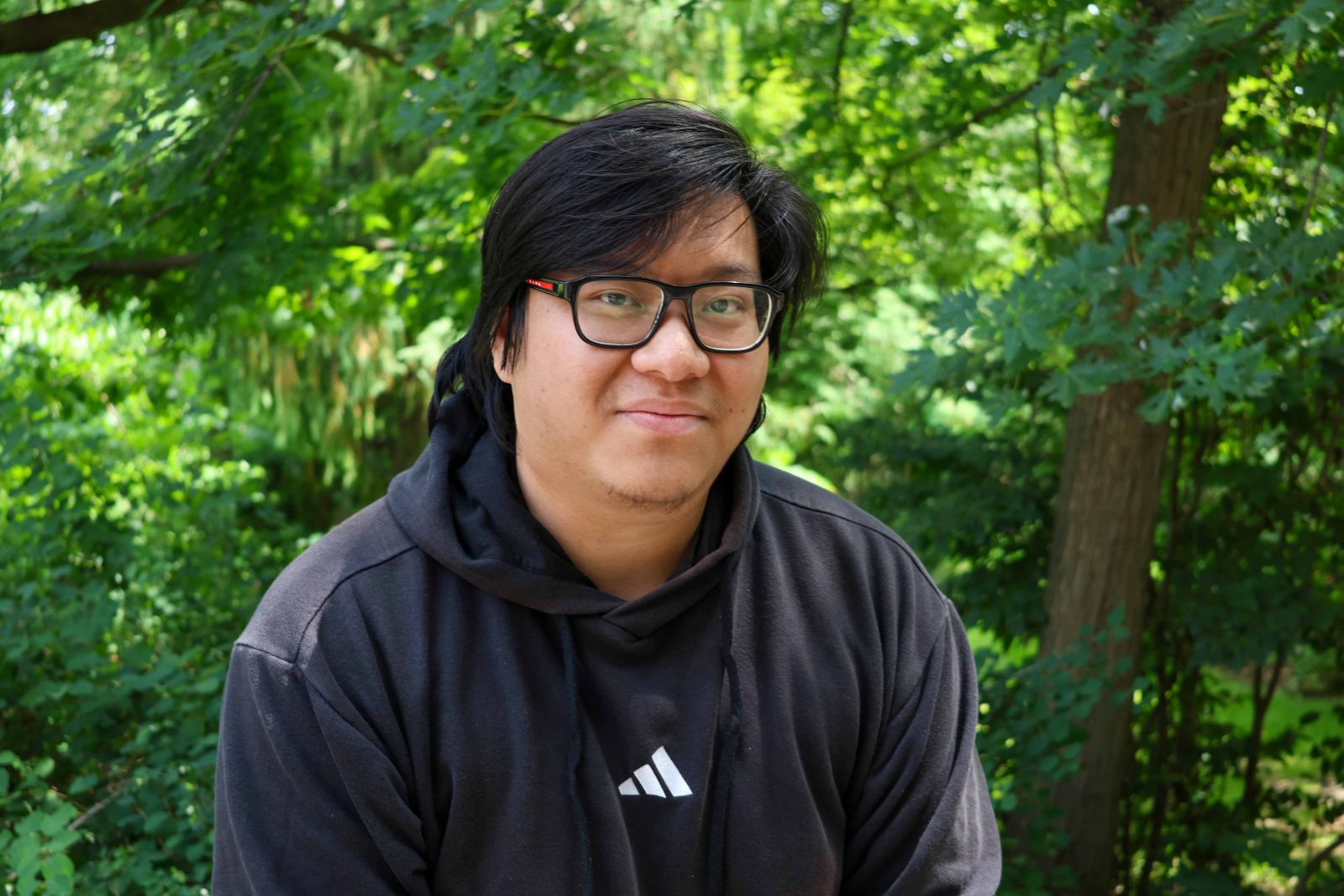
 In honour of Disability Pride Month in July, Brock’s Office of Human Rights and Equity is recognizing volunteer and scholar Steven Duong as an EDI Changemaker for his work supporting older adults with disabilities at the Brock-Niagara Centre of Excellence in Inclusive and Adaptive Physical Activity.
This article is part of a series celebrating students, staff, faculty or alumni who demonstrate a commitment to advancing equity, diversity and inclusion (EDI) on campus or in ways that meaningfully connect back to the Brock community. To read other EDI Changemaker features or learn more about the series, visit The Brock News or the Office of Human Rights and Equity website.
Steven Duong has spent the last year volunteering with a program designed to support adults over 50 who have disabilities. For him, Disability Pride Month is all about the joy he shares with the people he has gotten to know through that experience.
The Brock University Master of Applied Gerontology student says he has learned a great deal from participants in the Evergreen program at the Centre for Adaptive Physical Activity (CAPA), part of the Brock-Niagara Centre of Excellence in Inclusive and Adaptive Physical Activity.
Evergreen is an adaptive activity program for disabled adults over the age of 50 that also offers programming for disabled adults experiencing dementia.
Duong first became involved with Evergreen after receiving an email call for volunteers. Even though he had no experience with facilitating activities for older adults, he decided to volunteer anyway.
“I have a background in health policy from my undergrad, but when I transitioned to applied gerontology, I became more focused on an older population group,” he says. “I figured, what better way of learning more about advocating for the older adult population than by actually working with them?”
Duong volunteered faithfully with Evergreen through the fall, learning the ropes and building strong relationships with program participants. By winter, he was doing additional training and offering one-on-one customized program development.
When seeking a practicum placement for his final term at Brock, Duong was able to continue working at CAPA during a four-month summer internship with Professor of Kinesiology Maureen Connolly.
In addition to his work with Evergreen, he has delved into programming for other age groups and community initiatives, such as working with Red Roof Retreat to facilitate adaptive exercise sessions for a small group and teaching their support staff how to safely use CAPA’s exercise equipment.
Connolly and Duong launched a new community seminar series to help support caregivers and raise awareness on a range of topics, including allyship, caring for people with dementia, and aging parents who care for aging adult children.
The series is part of CAPA’s ongoing commitment to advocate for improved services for individuals with disabilities and their families.
“We need to find opportunities for disabled people to be visible, welcome and included in the community,” says Connolly. “Twenty per cent of Canada’s population is made up of disabled people, so changing environments and changing policies to remove barriers is a big part of disability pride.”
Connolly says she appreciates how Duong engages meaningfully with CAPA visitors, from community partners to new volunteers to program participants of all ages.
“Steven has developed a keen interest in working with younger participants as well as older adults this summer, and he has done some great liaison work with associations for community living and disability services organizations in the region,” she says. “He is reflective, thoughtful, engaged, respectful and curious, with great sensitivity to culture and aging. He’s very well suited to this kind of work.”
Megan Kuzak, Accessibility and Inclusion Advisor in HRE, says the Evergreen program’s focus on disabled older adults is noteworthy.
“Much of the disability related programming in Ontario is geared to children, young adults and adults, with a sharp drop off after the age of 50,” Kuzak says. “Programs like Evergreen are important to keep older adults engaged in their community and active.”
For Duong, who is now preparing to graduate, seeing participants improve their functional mobility through Evergreen has been deeply gratifying — but not as rewarding as when the participants themselves notice the benefits.
“One of my participants in Evergreen asked why the exercises are important, so I explained how each exercise targeted specific muscles and that strengthening those muscles would help her perform more everyday tasks at home,” he says. “A few weeks later, she came back and said she could see a difference, that she was able to do things she normally wouldn’t have done or done for a long period of time. It’s a really good feeling when they can see the change themselves.”