 September 2015 – April 2016
Opening: Alumni Homecoming and Grand Opening,
September 18, 2015
Location: DART Theatre Lobby, 2nd Level, 15 Artists’ Common
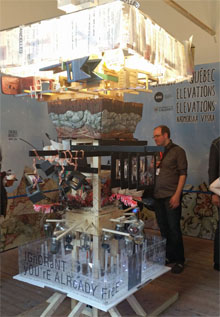
Exhibit of DART’s participation in the Canadian PQ2015 (Prague Quadrennial) exhibit Elevations, including parts of national collective project Totem. Theme: MUSIC. WEATHER. POLITICS. Also including: Fault Lines: digital exhibit of Brock students’ work.
 COLLEAGUES, STUDENTS, FRIENDS & FAMILY, If you were in Toronto in early June you were fortunate to see a performance of: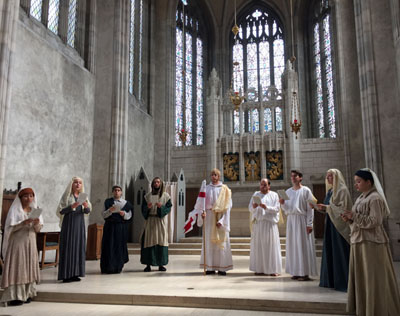

 Professor Gyllian Raby of Dramatic Arts (DART) and DART Alumna Caitlin English were recently honoured by the news that their film COMMOTION was awarded a Gold medal in the education category and a Silver medal in the research category by Prestige Film Awards, an international juried competition that connects filmmakers with distributors.
 We are very saddened to learn of the passing of our dear colleague and friend, the late poet Terrance Cox. Terrance taught for almost thirty years in Music and Dramatic Arts and helmed the first year course DART 1F93 for many, many years. Though he had not been well for a few years and was no longer teaching for the Department and the University we have always kept a very big place in our hearts for him.


 The 2013-2014 season of Toronto’s