Main

  • On display: Modern Languages, Literatures, and Cultures

    “Broad, wholesome, charitable views of men and things cannot be acquired by vegetating in one little corner of the earth all one’s lifetime.”  ― Mark Twain, The Innocents Abroad.

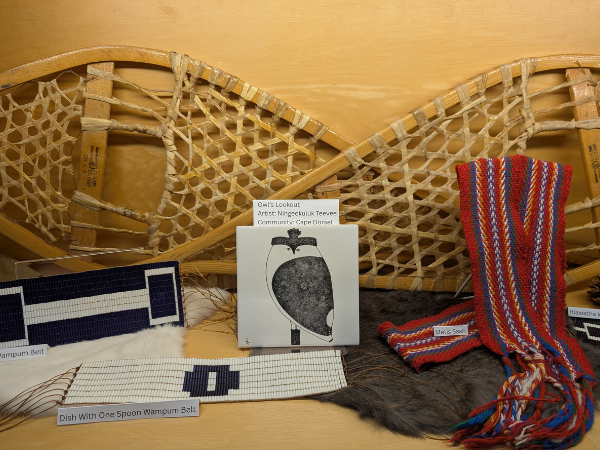
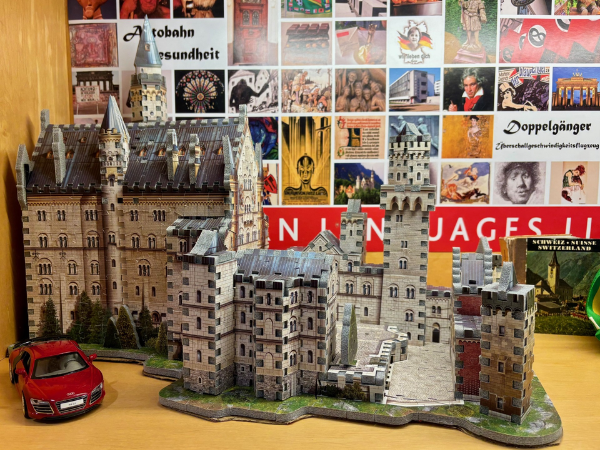
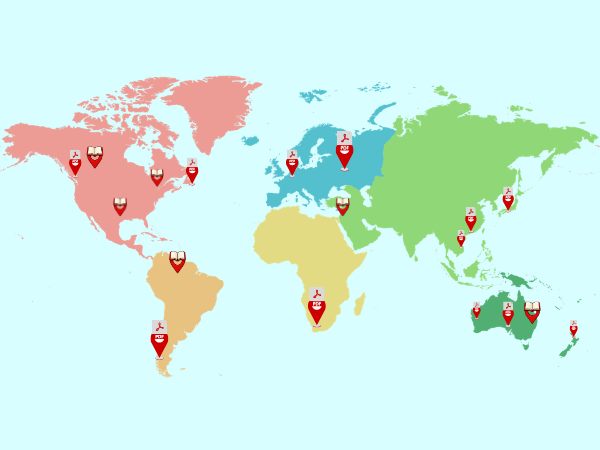
    The Department of Modern Languages, Literatures and Cultures (MLLC) welcomes you to browse through its latest exhibit in the Library and at the Thistle entrance to the Learning Commons. The display exemplifies the languages and unique cultures explored by students in our courses. May your curiosity be piqued! Perhaps some of the questions rooted in the history of these cultures will be raised by the materials on display.

    The exhibit runs from May 4 to 22, 2026.

    Tags:
    Categories: Learning Commons, Main

  • Exploring Law, Policy, and Migrant Justice

    Brock Library thanks Dorothy Sierra-Gutierrez, recent graduate, Teaching Assistant, and Researcher for this display and blog post. Visit Dorothy’s exhibit in the Matheson Learning Commons and at the Thistle entrance until May 1.

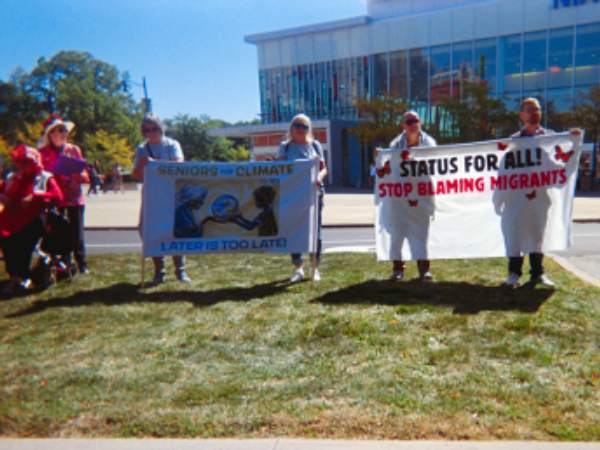
    This community display is named after my directed studies project, Exploring Law, Policy, and Migrant Justice, supervised by Dr. Julie Ham in the Department of Sociology and Criminology. This project examines the legal, social, and cultural dimensions of migrant farmworkers in Canada, with a focus on the Niagara Region. It emphasizes research ethics, reflexivity, and the student-researcher experience, guiding learners through the creation of a practical toolkit for ethical engagement, alongside recommendations for how Brock students can better recognize and support migrant workers in the region.

    What began as an academic interest quickly became something much more personal, grounded in lived experiences, community relationships, and a deeper understanding of how essential yet underrepresented migrant workers are in Canada.

    Through my studies, it became clear that migrant farmworkers play a critical role in sustaining our food systems. Across Canada, many workers from Mexico, the Caribbean, and Central America labour in agriculture through programs such as the Seasonal Agricultural Worker Program (SAWP). In regions like Niagara, their contributions include planting, harvesting, and pruning in agricultural sectors such as wineries. Yet despite their essential role, many face precarious working and living conditions, limited access to healthcare, and systemic barriers tied to their temporary immigration status.

    My interest in this topic deepened through my involvement with the Migrant Farmworkers Project in Niagara. While volunteering at the community hub, I supported the distribution of food, clothing, and hygiene products, and connected with workers in Spanish. These experiences allowed me to better understand the needs of migrant workers in the region, as well as the important role that local organizations and community partners play in supporting them.

    Through this directed studies project, I wanted to create something that was not only academic, but also accessible and practical. The result is an annotated bibliography and a Migrant Farmworker Justice Toolkit, now featured as part of the Brock University Library display. The annotated bibliography reviews key literature on migrant issues and policy developments, while also including prompts to encourage deeper student engagement. The Justice Toolkit brings together research, community knowledge, and practical resources to help students learn about migrant workers’ experiences and the broader systems that shape them.

    The toolkit explores key questions: Who are migrant farmworkers in the Niagara context? What challenges do they face? How can student researchers ethically engage with and learn from migrant communities? It also highlights local organizations and initiatives that support migrant workers. Importantly, the project centers both academic research and experiential knowledge, recognizing that meaningful understanding requires listening to those directly affected.

    One of my main goals was to challenge dominant narratives that portray migrant workers solely as vulnerable or passive. While vulnerability is an important part of the conversation, it is equally necessary to recognize migrant workers’ resilience, agency, and contributions. This project aims to move beyond simplified narratives and instead offer a more nuanced and humanizing perspective.

    Creating this toolkit also pushed me to reflect critically on my own role as a researcher. How do we engage ethically with communities? How can research be mobilized in ways that extend beyond the classroom? These questions shaped both the content of the project and its presentation in this display, designed to invite reflection, learning, and action.

    By sharing this work, I hope to contribute to a broader understanding of migrant justice and encourage others to think more critically about the systems that shape our agricultural food systems and immigration policies.

    If you have the chance, I invite you to visit the display, engage with the toolkit and annotated bibliography, and reflect on how Brock University, as an institution, can contribute to advancing migrant justice in the Niagara Region.

    Bio:
    Brock University Teaching Assistant, Dorothy Sierra-Gutierrez
    Dorothy Sierra-Gutierrez

    Teaching Assistant
    NCLC Board Member
    Brock University
    Undergraduate Sociology (Honours) Co-op
    Concentration in Criminology
    Double Minors in French Studies and Women and Gender Studies


    Tags: ,
    Categories: Learning Commons, Main

  • Evolution of the Map, Data & GIS Library (MDGL)

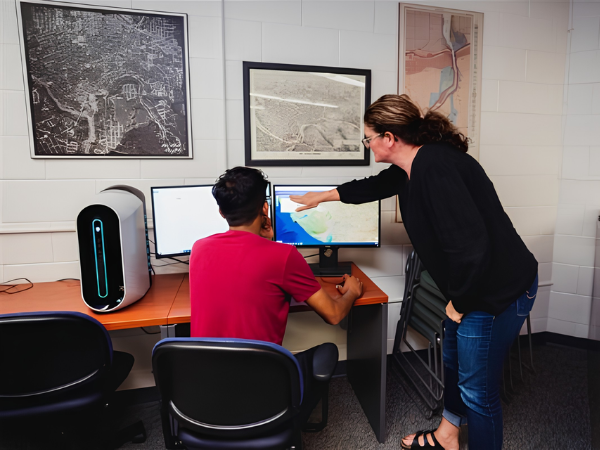
    This message is to announce an important update to the Map, Data, and GIS Library (MDGL). Going forward, Brock Library will be providing the MDGL’s services and collections from the Gibson Library. This will make possible improvements such as better access to the collection and increased availability of specialist time to support research and instruction. The MDGL space in Mackenzie Chown will close. Brock Facilities Management is at work planning the conversion of that space to become labs for Engineering and other FMS programs.

    Geospatial analysis techniques have been transformed over the past twenty years through digital maps and GIS software. Use of the physical map collection has dwindled steadily. Meanwhile budgetary challenges have made it difficult to maintain minimum staffing levels. The move to the by-appointment model (May 2025) revealed that the library could continue to offer all the services of the MDGL through staff based in the Gibson Library. This decision is consistent with patterns observed at other universities. Dedicated map library spaces at Yale and University of Birmingham closed in the past few years, with the collection redeployed to other units or libraries. In Canada, the University of Calgary stores only its highest use and geographically relevant materials on site and U of T moved their collection into storage.

    Students and faculty will continue to have access to course-integrated instruction and workshops on GIS skills and mapping, one-on-one support with the library’s Map, GIS and Geospatial Data Specialist, and the distinctive collection of maps, atlases, gazetteers and air photos in physical and digital formats. The collections of the MDGL will benefit from improved access (Gibson is open much longer hours) and increased focus on collection development through the expertise of a specialized Collections Librarian. For students, Gibson offers a wider array of study space options including bookable individual and group study rooms.

    If you have questions about this announcement, please contact University Librarian Nicole Nolan at [email protected].

    Tags: , , ,
    Categories: Main, MDGL

  • Student Exhibit: Notions of Niagara

    Brock Library thanks Dr. Keri Cronin and the students of HAVC 2P90 for this exhibit and blog post.  

    Notions of Niagara, a new exhibit in the Library and at the Thistle entrance to the Matheson Learning Commons, features a selection of items from Brock’s Archives & Special Collections chosen by Visual Arts students in HAVC 2P90 (19th Century Visual Culture).

    Each student selected an item from the collection to research for this exhibit. The selection of objects and images in this exhibit present a range of ways to think about the histories of Niagara. There are images relating to public spectacles (e.g. images of daredevils and “stunters”), items drawn from daily life (e.g. a bank note, a placecard used for a dinner party), and objects that give us a glimpse of the private lives of people who once lived here (e.g. photo albums, miniature portraits, and a collection of lockets of hair). Taken together, these items speak to the dynamism of this region’s histories and the ways that visual culture can help us explore these stories.

    You can learn more about this exhibit at the following website: https://ecampusontario.pressbooks.pub/notionsofniagara/

    Notions of Niagara will be on display until April 2nd.

    Categories: Archives, Learning Commons, Main

  • Learning Commons display highlights UN’s Sustainable Development Goals

    Discover the United Nations’ 17 Sustainable Development Goals (SDGs) through an engaging visual display that highlights the global roadmap for building a more just, equitable, and sustainable world by 2030.

    Each goal—ranging from quality education and gender equality to climate action and responsible consumption—invites viewers to reflect on the challenges facing our world and the collective action needed to overcome them. Explore how these interconnected goals shape international cooperation, local initiatives, and everyday choices, and be inspired to consider your own role in advancing sustainable change. The SGD goals are currently on display in the Matheson Learning Commons.

    Brock International curated this display.

    Please take a look at the Library’s Sustainable Development Goals book collection here.

    Tags: ,
    Categories: Learning Commons, Main

  • We are hiring Student Library Assistants

    We’re hiring three Fall/Winter Semester Student Library Assistant positions!

    Do you know someone looking for a great campus opportunity?

    Student Library Assistants work at the Ask Us Desk! You’ll be the friendly face helping students, staff and faculty with:

    • Borrowing & returning materials
    • Printing & copying
    • Directional help and basic research support

    Applications close March 6 at 11:59 PM

    Contract Term:
    Monday, August 24, 2026 – Friday, April 30, 2027

    Availability Required:
    Evenings & weekends

    If you or someone you know is interested, be sure to apply before the deadline! Don’t miss out on this opportunity.

    Apply here!

    Categories: Main

  • Celebrate Open Education Week with Us!

    The Brock Library and Brock’s Centre for Pedagogical Innovation invite you to join us in celebrating Open Education Week 2026 

    Running from March 2-6, 2026, OE Week is an annual global celebration of our collective achievements in Open Education (OE). Brock is one of many institutions all over the world that is participating in hosting events that share leading practices, highlight faculty and student experiences, and advocate for the inclusion of more open practices within education.  

    Throughout the week, the Library and CPI will be hosting several workshops and events, all of which can be found on ExperienceBU: 

    You can also attend events that are hosted globally! See the OEGlobal events calendar for hundreds of workshops, panels, and more. 

    We look forward to celebrating with you from March 2-6!  

    Tags: , ,
    Categories: Main

  • New library tutorial helps students navigate Generative AI

    The Library has launched LIB102: Me, Myself, and A.I., a self-paced online tutorial that helps students navigate Generative AI in their academic work.

    Through 8 interactive modules, students learn how Generative AI tools function, where they are strong or limited, and how they differ from traditional sources like scholarly databases and Wikipedia. The tutorial emphasizes accuracy, bias, and the human and environmental impacts of AI, asking students to consider when AI might support learning and when it risks undermining skill development or academic integrity.

    Students also work through common academic scenarios, identify where Generative AI can help or hinder learning, and develop practical strategies for safe, effective prompting and information privacy. LIB102 also addresses how to acknowledge and cite AI tools, including when to provide an AI use statement and where to find discipline-specific citation guidance (APA, MLA, Chicago, and others). The tutorial concludes with a short quiz that generates a downloadable certificate upon completion which students can submit as a small assignment or activity in their courses.

    LIB102 is suitable for adoption in any course that engages with writing, research, or digital literacy. Instructors interested in integrating the tutorial into their Brightspace site can simply create a Brightspace assignment with a file upload and the link to the tutorial (below), allot a small grade or pass/fail, and require students to upload the certificate of completion.

    Tutorial link: https://brightspace.brocku.ca/d2l/le/discovery/view/course/184265

    To learn more contact Vanja Stojanovic (Teaching & Learning Librarian) at [email protected]

    Tags: , , ,
    Categories: Main

  • Learning Commons exhibit explores women in sports

    Brock Library thanks Isobel Flindall, Graduate co-op student librarian in Collections Services for this exhibit and blog post. Visit the display in the Matheson Learning Commons until February 27. 

    With teams in the Professional Women’s Hockey League (PWHL), Women’s National Basketball Association (WNBA), and Northern Super League (NSL), Canada’s professional women’s sports reached a “critical mass” in 2024 (Spencer, 2024). This is exciting for those of us who enjoy spectating hockey, basketball, and soccer games – but also for youth and student athletes, for whom the goal of playing professionally is now “much more tangible” (Stober, 2024).

    The rise of women’s participation in professional team sports is associated in part with identified consumer potential (Boer, 2025; Pegoraro & Taylor, 2021; Stober, 2024). While the implication that the industry’s commitment to women’s sports is dependent on their profitability is disappointing, it also shows that we as consumers can make a difference.

    A featured collection of books, e-books, and a/v materials accompanies the exhibit and is an invitation for the reader to get thinking about women’s sports. To celebrate successes, like Canada establishing professional women’s teams in the PWHL, WNBA, and NSL, without overlooking the persistence of sexism in the sports industry (Hindman & Walker, 2020; Milner & Braddock, 2017).

    Sources:

    Boer, T. D. (2025, July 4). Women’s sports are booming. Why now? CBC Sports. https://www.cbc.ca/sports/womens-sports-growth-north-america-why-now-1.7569708

    Hindman, L. C., & Walker, N. A. (2020). Sexism in Professional Sports: How Women Managers Experience and Survive Sport Organizational Culture. Journal of Sport Management, 34(1), 64–76. https://doi.org/10.1123/jsm.2018-0331

    Milner, A. N., & Braddock, J. H. (2017). Women in Sports: Breaking Barriers, Facing Obstacles. Bloomsbury Publishing USA. http://ebookcentral.proquest.com/lib/west/detail.action?docID=4923027

    Pegoraro, A., & Taylor, T. (2021). Editorial: Women’s Professional Sport: Understanding Distinctiveness. Frontiers in Sports and Active Living, 3, 806247. https://doi.org/10.3389/fspor.2021.806247

    Spencer, D. (2024, December 25). Canada’s women’s pro sports landscape transformed in 2024 with arrival of PWHL, NSL, WNBA. CBC Sports. https://www.cbc.ca/sports/year-in-review-canada-womens-pro-sports-1.7418973

    Stober, E. (2024, April 6). Women’s pro sports is a ‘global phenomenon’—And Canada is finally joining in. Global News. https://globalnews.ca/news/10406205/womens-sports-canada-project-8/

    Tags:
    Categories: Learning Commons, Main

  • Love Data Week is back with a full slate of workshops! 

    Love Data Week (February 9–13) is an annual, worldwide initiative that promotes data literacy, builds data skills, and showcases data repositories. In alignment with this year’s theme, “Where’s the Data?”, the Library has organized a week of virtual workshops highlighting data resources and research practices. Workshops will introduce databases that provide access to full datasets, explore strategies for preserving data you produce in your own research, and develop foundational GIS and data visualization skills, no prior experience required! The program also includes a workshop in partnership with Statistics Canada on locating published historical data, as well as a session focused on developing a Data Management Plan.

    To view the full program at Brock, and register for workshops, visit: https://experiencebu.brocku.ca/organization/library

    For a list of all global events and workshops, visit: https://www.icpsr.umich.edu/sites/icpsr/about/news-events/international-love-data-week/events

    Tags: ,
    Categories: Main, MDGL