Get to know the faces behind the Office of Human Rights and Equity. Our diverse team is dedicated to fostering inclusion and promoting equity in every aspect of our work. Learn more about the team below.
For contact information, please visit our contact us page:
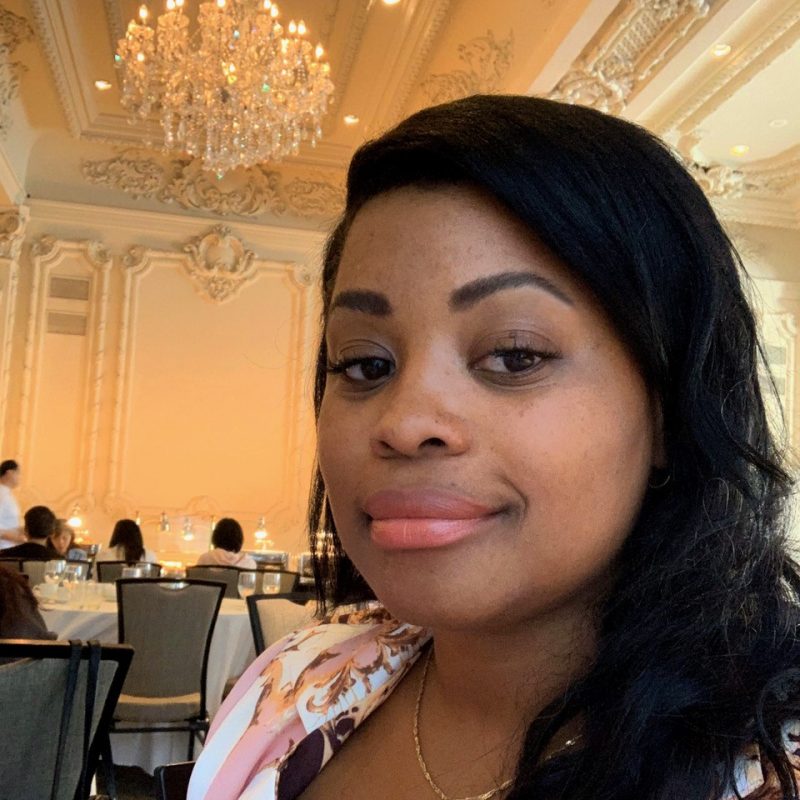
Alana Lowe
Associate Director, EDI Education and Outreach
She/They pronouns
Alana is an equity, diversity, and inclusion (EDI) educator and human rights practitioner with over 20 years of experience across public education, postsecondary institutions, and community-based advocacy. Their work spans anti-racism, institutional change, policy development, and applied research, with a focus on addressing systemic inequities and advancing meaningful inclusion.
Alana has led and supported large-scale systems change initiatives in collaboration with Black student leaders, educators, and community organizations, centering lived experience as a critical driver of institutional transformation. They bring deep expertise in designing and implementing EDI strategies, facilitating complex and often challenging conversations, and translating human rights principles into actionable policies, practices, and learning environments.
Grounded in a commitment to equity and accountability, Alana’s work prioritizes creating sustainable change within institutions and centring the leadership, knowledge, and experiences of those most impacted by exclusion.
Alana is currently completing a Master of Arts in Social Justice Education at the University of Toronto.

Alison Rothwell
Human Rights Advisor
She/Her pronouns
With Brock since 2002, she brings over 20 years’ experience in post-secondary institutions and believes that true inclusion is an anticipatory process that requires ongoing reflection and flexibility. She is a Disability and Human Rights Advocate and Professional. Her academic research focuses on representation, identity and the rhetoric of disability and mental health, and has a particular interest in the relationship between disability and embodiment. She has expertise in rights-based negotiation, conflict resolution, alternative dispute resolution, as well as labour, employment, and public policy administration. In her spare time, she instructs post-secondary courses in Disability Justice, Human Rights, and UDL, and is active in animal and wildlife rescue and conservation.

Chelsea Takalo
Associate Vice-President, Equity, Diversity and Inclusion
She/They pronouns
I am my mother’s daughter. Raised in government housing by a single mother (community activist and mobilizer), Chelsea was encouraged to understand the uniqueness of intersectional experiences and the importance of social justice and collective care as acts of resistance. As a settler on this land of Finnish, French, Jewish and Chinese descent, and a Survivor of family and sexual violence, Chelsea is committed to transformative social change, accountable actions and to dismantling all forms of intersecting oppressions within organizations and institutions grounded in listening to and learning from diverse communities and stakeholders.
Chelsea is an EDI and human rights organizational change specialist with over 20 years of experience in designing and delivering systems change initiatives based on equity, anti-oppression, trauma informed practices, social justice, and human rights. They started their activism journey at the age of 8 as a member of the Jr Board of Directors within their housing co-op. At the age of 13, responsive to the lack of affordable local youth programs, they co-founded SEYA, a youth led social justice advocacy organization resulting in recognition through national awards.
Over the last 20 years, Chelsea has worked for a variety of community based and educational institutions. Their work involves managing complex, large scale, public facing human rights concerns and facilitating restorative and transformative healing-centred responses grounded in cultural safety and collective care. Additionally, they have transformed schools and institutions through the co-construction, facilitation, and reporting on multi-year EDI strategic plans including professional learning, ongoing gathering of quantitative and qualitative stakeholder data, and community engagement events, programs, and campaigns. Chelsea’s practices are grounded in anti-oppressive, anti-racist, anti-colonial, trauma-informed, culturally responsive, feminist, critical, and intersectional approaches, theories, and pedagogies.

Katie Keays
Manager, Gender & Sexual Violence Intake
She/Her pronouns
In her role as the Manager of Gender and Sexual Violence (GSV) Intake, Katie is an excellent collaborator and advocate for positive change. At the heart of her mission is a dedication to anti-oppressive and decolonial practices, survivor-centered care, and a trauma-informed approach, all of which underscore her commitment to fostering an inclusive and supportive environment. Katie works directly with survivors, offering compassionate guidance, and serving as a steadfast advocate, ensuring they are aware of the full spectrum of options available to them. She also provides collaborative leadership for GSV support programs and in strategic planning for sexual violence prevention, education, and response. In every aspect of her work, she aims to empower survivors to reclaim their agency and voice.
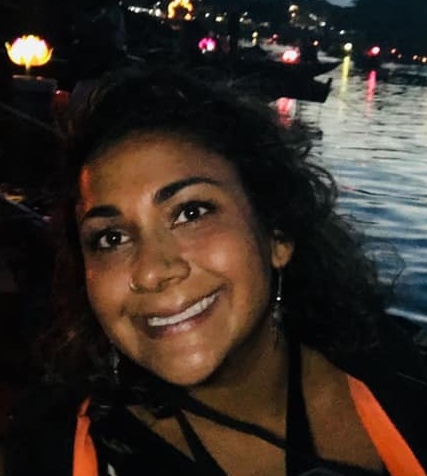
Gita Madan
Associate Director, Human Rights & Community Care
She/Her pronouns
Gita works at the intersection of human rights, education, and institutional change, with a focus on supporting individuals and organizations in navigating sensitive issues and addressing systemic barriers with care, clarity, and accountability.
She brings experience across public education, senior organizational leadership, and community-based organizing. Prior to joining Brock, she served as the inaugural Director of Diversity, Equity, Inclusion and Corporate Communications at Scholastic Canada, where she led the organization’s first national DEI strategy and developed systemic responses to complex equity issues.
She holds a Master’s degree in Social Justice Education and has taught and published in the areas of educational justice and critical pedagogy. Her work is grounded in a commitment to dignity and collective care, and to supporting people, institutions, and communities in navigating conflict and harm in ways that are thoughtful, just, and transformative.

Megan Kuzak
Accessibility and Inclusion Advisor
She/Her pronouns
As the Accessibility and Inclusion Advisor at Brock University, Megan leverages her extensive experience in social work to foster inclusive environments. Holding a Bachelor of Psychology and a Bachelor of Social Work from Trent University, as well as a Master of Applied Disability Studies from Brock University, Megan brings a comprehensive understanding of social systems and critical disability studies to her work. With her professional experience in Northern Ontario, Megan has held various roles, including working with people experiencing gender-based violence, working as an in-school youth addictions worker, and a disability case manager in Ministry of Children, Community and Social Services funded programs. In her role as a case manager, Megan supported people in navigating high-risk situations, such as incarceration, homelessness, and job loss. Guided by a client-centered and solution-focused approach, Megan consistently prioritizes supporting people and communities in removing barriers. With a passion for advancing equity and inclusivity through policy development, education, and community engagement, Megan continues her work at Brock University!

Rabia Choudhary
Student Justice Education Coordinator
They/Them pronouns
Rabia is an intersectional artist, educator and scholar with a passion for social justice, equity, gender and sexual violence education and prevention, disability justice and activism. They have over five (5) years of experience working and volunteering in marginalized communities, as an educator, facilitator, and peer support person. Rabia is devoted to decolonization, anti-racism and QTBIPOC equity within community spaces and academia.
In their role, Rabia supports students experiencing various forms of oppression and/or discrimination through a trauma-informed, survivor centered framework. They also supervise and support student staff in their learning as activists and advocates for equity and social change.
Student Justice Centre links:

Dr. Ryan Persadie
Sexual and Gender Diversity Advisor
He/They pronouns
Dr. Ryan Persadie is an interdisciplinary social justice researcher, award-winning educator and the Sexual and Gender Diversity Advisor at Brock University. He comes to Brock University with over ten years of experience as a high school teacher, university course instructor and curriculum developer and LGBTQ+ youth engagement specialist. Since 2017 he has also worked as a community organizer to facilitate safe spaces of belonging, community development and solidarity among diasporic queer and trans of colour communities with multiple community groups based in Toronto and NYC. Organizations he has worked with include the Caribbean Equality Project and Jahajee in Queens, NY; Queeribbean Toronto, the Alliance for South Asian AIDs Prevention (ASAAP), Toronto Families and Kids for Palestine and Lotus Toronto in Toronto; and Feminitt, Intersect Antigua and the Eastern Caribbean Alliance for Diversity and Equality (ECADE) in the Caribbean.
At the University of Toronto, he served as the Chair of the Sex Salon Event Series for three years where he led a team of graduate students in producing academic and community events related to LGBTQI+ activism, pedagogy, and theory in Toronto. He completed his PhD in Women and Gender Studies and Sexual Diversity Studies at the University of Toronto in 2025. He also holds a Master of Arts in Ethnomusicology, a Bachelor of Education, and a Honours Bachelor of Music with specialization in Music Education. Through his research practice, he carries subject matter expertise in transnational and women of colour feminisms, anti-oppressive pedagogies and research methodologies, queer and feminist of colour social movements and theory, queer migration, transnationalisms and diasporas, critical masculinity studies, queer performance and popular culture, and Afro-Asian relationalities and solidarities in the Americas.
He is very excited to join the team at the Office of Human Rights and Equity and looks forward to working with staff, faculty, and students in supporting ongoing and emerging social justice and gender and sexual diversity initiatives across Brock University.

Shaka Licorish
Anti-Racism and Inclusion Advisor
He/Him pronouns
With over 20 years of experience and execution in both non-profit and for-profit sectors, across equity, diversity, & inclusion, social & community impact, art & culture, and an industry leading global start-up, Shaka is a highly innovative visionary, organizational leader, strategist, and connector. Passionate about the intersections of race, class, culture, and community, Shaka brings exceptional range and understanding to the practice and principles of anti-racism, anti-Black racism, and inclusion, amongst others.
As a former Ontario University Athletics (OUA) and semi-professional team sport athlete, Shaka’s anti-oppression and equity journey began as a student-athlete attending the University of Guelph while in pursuit of a Criminal Justice & Public Policy degree. During this time, Shaka worked extensively in open custody youth detention facilities across Southern Ontario, wherein he was exposed to several systemic and institutional service gaps that were disproportionately affecting young people and families from equity deserving groups and communities.
Following the completion of his second degree in Political Science from McMaster University, Shaka went on to serve as a youth community counsellor and facilitator, where he developed and led programming, workshops, internships, and experiential learning opportunities for underserved young people from at-risk and high-risk communities, many of whom were in conflict with the criminal justice system and often subjected to experiences of violence. In this capacity, Shaka gained invaluable experience and skills in advocacy, crisis management, alternative dispute and conflict resolution, mediation, as well as program management, analysis, and evaluation.
As a community minded advocate and through his own exposure and involvement with Toronto’s vibrant art & culture sector, Shaka developed a deep appreciation for the power of storytelling to inspire meaningful change through various mediums, including music, film, art, and design. This ultimately led him to the role of Director, Education & Film with Manifesto, a community-based arts & culture organization focused on providing underserved youth and communities access to impactful art & culture-based programming and education opportunities. Following a series of film programming roles at The Regent Park Film Festival, The Toronto International Film Festival, and the Hot Docs International Film Festival, Shaka went on to explore his natural talents as a producer, serving as lead executive of the critically acclaimed stage production, Secrets of a Black Boy – a timeless story that explored the trials, traumas, and triumphs of five Black men coming of age in Regent Park.
Currently the Board Chair of New Leaf Foundation, a registered non-profit that provides access to mindfulness resources and tools for underserved youth and communities, Shaka remains dedicated to disrupting mechanisms of oppression and exclusion, while developing strategic relationships and partnerships that can advance, support, and reinforce the importance of collective awareness, understanding, and meaningful action with respect to the equity, diversity, and inclusion space and its related initiatives.

Tassia Gabbidon
Intake & Support Counsellor
She/Her pronouns
Tassia’s journey toward a career dedicated to creating meaningful and transformative change through service to those in need traces back to her early fascination with the human condition and the intricacies of the mind. Growing up, she eagerly delved into books and documentaries, using them as tools to psychoanalyze characters and vicariously connect with their experiences.
Her passion for making a positive impact on the lives of others became evident during her undergraduate years, where she pursued a BA in Sociology. During this time, Tassia actively engaged in volunteer work with numerous community service organizations, a commitment she continues to uphold to this day. These experiences served as a confirmation of her desire to create positive change.
After completing her undergraduate studies in Sociology, Tassia furthered her education by pursuing a Master’s in Counselling Psychology at Yorkville University. She is now a registered professional (RP-Q) Psychotherapist, with a wealth of clinical training that has provided invaluable insights into the psychological impact of challenges within both home environments and broader society. Her work acknowledges the profound ways in which these tribulations manifest within individuals, shaping their lived experiences.
Tassia’s tireless advocacy for social justice is a core aspect of her mission. She is dedicated to combating oppression, decolonizing access to mental health services, and amplifying mental health awareness in historically excluded and under-resourced communities. Her multifaceted approach to effecting change includes representation, education, art, and wellness.
With a keen awareness of the intricate interplay between class, gender, race, disability, sexual orientation and other forms of discrimination, Tassia brings a holistic perspective to her work. Her dedication extends to her recent role as the Gender & Sexual Violence Intake Support Coordinator on the Human Rights & Equity Team (HRE), where she has dedicated herself over the past year. Currently, Tassia serves as the Counsellor of Anti-Oppression & Justice within HRE and takes on the role of Co-Coordinator in the Black Student Success Centre.
Outside of her various roles, you’ll often find Tassia spending time with her family and friends, seeking new adventures in far-off places, getting lost in the pages of a good book, reconnecting with nature through hikes and some good tunes, and indulging in fresh culinary experiences.

Taylor Court
Gender & Sexual Violence Support & Education Coordinator
She/Her pronouns
Taylor joined the team with a near decade of volunteer and work experience dealing directly with victims of all forms of violence. A graduate of the Criminal Justice & Public Policy program at the University of Guelph, Taylor’s career has focused on victimology after discovering the concerning prevalence of sexual violence that occurs within a university campus.
Taylor has worn many hats during her time in the industry. Beginning with phone support, Taylor gained volunteer experience in Crisis Support with the Niagara Region Sexual Assault Centre (CARSA) and SAVIS of Halton. Taylor has also provided in person support as a Facilitator at the University of Guelph’s Office of Diversity & Human Rights, as well as being a Hospital Response Worker dealing personally with victims of Sexual-based violence. During the four years spent at Victim Services Niagara, Taylor balanced a client case load, while also managing a team of volunteers who provided support for survivors.
Taylor strives to be an ally first, understanding that universities are a melting pot of diversity. She is encouraged by the opportunity to support students as she can relate to the many risks that exist on campus. Taylor thinks her biggest strength is her knowledge of the Niagara Region and her experience working directly with many local avenues for support.
Outside of work, Taylor loves to hang out with her daughter and her kitten. She likes to explore local markets and loves to go to the beach.