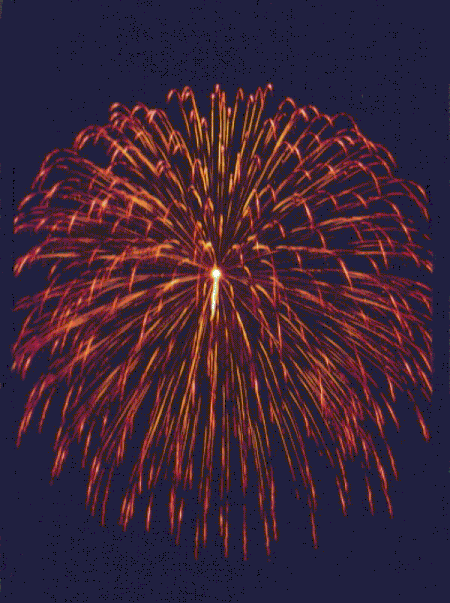
There is a lot of geometry involved in fireworks. During this activity you will learn about some of the different types of fireworks and their geometry.
Image courtesy of Matt Russell at http://www.telescopes.cc
The firework shown above is one of many types of fireworks that explode into a sphere of light. This one is called a "Chrysanthemum", named after the flower. As you know, the light and colour you see come from stars, which are balls of chemicals packed into the firework shell. When the stars are ignited, they explode outwards.
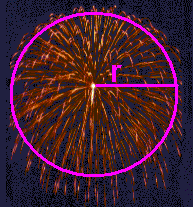
The radius of the sphere depends on the speed of the exploding stars. The faster the stars move, the larger the sphere can grow before they burn out.

Question #2Pistils are similar to Chrystanthemums, but they have a spherical core that is a different colour. Click on the image to the left to see an outline of the circles.
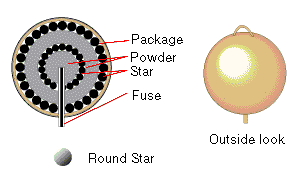
How is this possible? Well one way is to use the round shell shown on the right. The fuse lights the outer layer of stars first, and immediately after it lights the inner layer.
If those two layers are made of different types of stars, then the colours will be different. Notice that the amount of black powder used to ignite the stars is less for the inner than the outer stars. This will cause the outer stars to have a greater velocity that the inner and therefore the inner layer will create a smaller sphere when they explode, just like the picture of the Pistil.
Lastly, we will look at the Pistil in two dimensions. Viewed from any one location (say English Bay), a Pistil looks like two concentric circles of light (wave your mouse over the picture of the pistil above to see what I mean).
Question #3
To an observer on the ground, what area of the entire firework (at its maximum radius) is blue, and what area is pink. Remember, the area of a circle is: A = pr2.