

Mr.
Smith realizes that there is more t
1)
a)
Look at the
http://www.hc-sc.gc.ca/hpfb-dgpsa/onpp-bppn/food_guide_rainbow_e.html
Solution:
|
Food Group |
Median number of servings |
Percentage of total
servings |
|
Grain Products |
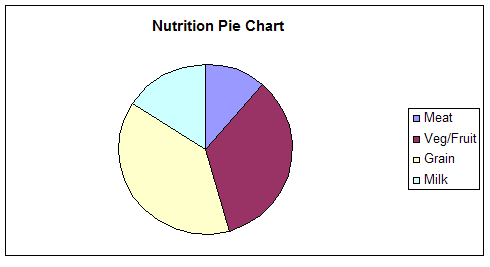
8.5 |
38.6% |
|
Vegetables and Fruit |
7.5 |
34.1% |
|
Milk Products |
3.5 |
15.9% |
|
Meat and alternatives |
2.5 |
11.4% |
b)
Make a pie chart representing the recommended daily amount of serving for the
four food groups.
Solution:
2)
a)
Mr. Smith feels that his kids always make him buy too many unhealthy snacks.
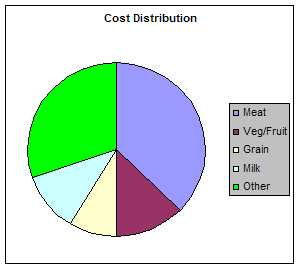
Find the percentage of money Mr. Smith spends on each of the four food groups
and on other foods (like chips, pop, candy, and chocolate).
|
Here is
his weekly grocery list: |
Approximate costs of the items ($) |
#Servings |
|
4 L of Milk |
3.28 |
16 |
|
1 kg of cheddar cheese |
12.98 |
10 |
|
Two Dozen eggs |
6.95 |
24 |
|
Two whole wheat breads |
2.05 |
20 |
|
One white bread |
1.55 |
10 |
|
1 kg of blueberries |
3.98 |
10 |
|
1 L of Olive oil |
5.95 |
other |
|
400 g of butter |
2.95 |
other |
|
One whole chicken |
5.98 |
8 |
|
2 kg of salmon |
14.67 |
20 |
|
1.5 kg of roast beef |
24.95 |
15 |
|
Two boxes of breakfast
cereal (400g each) |
5.35 |
26 |
|
2 kg of rice |
3.1 |
20 |
|
4 bags of potato chips |
9 |
other |
|
Four 2L bottles of pop |
6.89 |
other |
|
2 L of orange juice |
4.78 |
16 |
|
One head of lettuce |
1.01 |
2 |
|
500 g of tomatoes |
2.38 |
5 |
|
One deep fried apple pie |
4.98 |
other |
|
3 kg of potatoes |
3.75 |
15 |
|
500 g of celery |
1.27 |
5 |
|
500g of carrots |
1.23 |
5 |
|
560g of chocolate bars |
9.8 |
other |
|
300g of candy |
3.75 |
other |
Solution:
|
Food Group |
Amount |
Percentage of total
spending |
|
Grain Products |
12.05 |
8.5% |
|
Vegetables and Fruit |
18.40 |
12.9% |
|
Milk Products |
16.26 |
11.4% |
|
Meat and alternatives |
52.55 |
37.5% |
|
Other foods |
43.32 |
30.4% |
b)
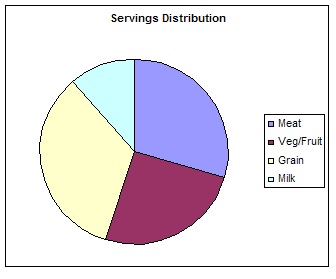
For each food group, find the total amount of servings and percentage of the
total servings that Mr. Smith buys.
Solution:
|
Food Group |
Total number of servings |
Percentage of total
servings bought |
|
Grain Products |
76 |
33.5% |
|
Vegetables and Fruit |
58 |
25.5% |
|
Milk Products |
26 |
11.4% |
|
Meat and alternatives |
67 |
29.5% |
|
Other foods |
|
|
c)
Compare the percentages obtained in parts a and b by making two pie charts. What would your suggestions be for a
better balanced grocery list?
Solution:
Suggestions may vary:
Grain products, vegetables and fruit are the cheapest per
serving. Milk and especially meat
products cost more per serving. Mr.
Smith should buy less junk food, because he spends almost a third on food with
very little nutritional value.
d)
According to question 1, how many days of balanced nutrition can the shopping list
provide for 1 person?
Solution:
76/8.5= 8.9
58/7.5= 7.7
26/3.5= 7.5
67/2.5= 26.8
7 days, because there are about 7 days worth of milk products
e)
Mr. Smith knows that 2/3 of the time his family eats out or orders food
in. How many more servings and from
which food groups does he need, to make the home meals balanced for his entire
family for a week?
Solution:
6 (6 people in his family including his) times 1/3 (since they eat
at home 1/3 of the time) times 7 days of servings = 14 days of servings
14*8.5= 119 servings of grain products
14*7.5=105 servings of vegetables/fruits
14*3.5=49 servings of milk products
14*2.5= 35 servings of meat products
Therefore he needs a total of
119-76
= 43 servings of grain products
105-58=
47 servings of vegetables/fruits
49-26=
23 servings of milk products
After
thinking about his grocery list, Mr. Smith decides to buy more food that will
help him to create healthier meal choices.
3)
a)
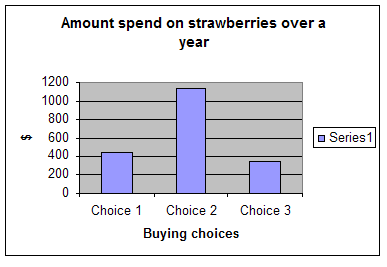
Mr. Smith wants to replace candy with strawberries on his weekly grocery
list. If he decides to buy 2 kg of
strawberries a week, make a bar graph depicting the amount that he will pay
over a year for the possible choices.
There
are three choices:
Choice
1: $4.28/kg
Choice
2: $2.18/200g box
Choice
3: $5.98 /4lb box
Solution:
2kg a week times 52 weeks = 104 kg a year
Choice 1 would cost 4.28*104 = $445.12
Choice 2 would cost 2.18*5*104 = $1133.60
Choice 3 we need to convert pounds to kilograms. 4lb/2.2= 1.82 kg
So the price is $5.98/1.82kg. We can now find the price
(104kg/1.82kg) times $5.98 = $341.71
b)
Which choice is the best, and how much money will he save over a year with that
choice?
Solution:
Choice 3 is obviously the best; he will save $104.41 over the next
best choice.
c)
Mr. Smith decided that he is going to buy twice as much pasta
(by weight) t
Solution:
He is buying 6 pounds of pasta
Mr.
Smith is done shopping and is now standing in line.
4)
a)
He estimates that he will need to buy 11 plastic bags to put his groceries
in. Each plastic bag costs 4 cents. If
he goes shopping every week, how much money would he save over a year if he
reused his bags instead of buying new ones every time?
Solution:
11bags*52weeks in a year*4cents = $22.88
He would save $22.88 and help the environment
b)
Mr. Smith pays $17.57 tax for his groceries. If the tax for his goods is 7%,
what is the total amount he paid?
Solution:
If we multiply the amount his groceries cost by 0.07 we must get
17.57. That means we can divide 17.57 by 0.07 to obtain the amount groceries
cost without taxes. 17.57/0.07 = $251
Therefore, the total amount he paid was $251+$17.57= $268.57
After
Mr. Smith got the receipt, he placed all the groceries in a storage locker and
went to join up with the rest of his family.